
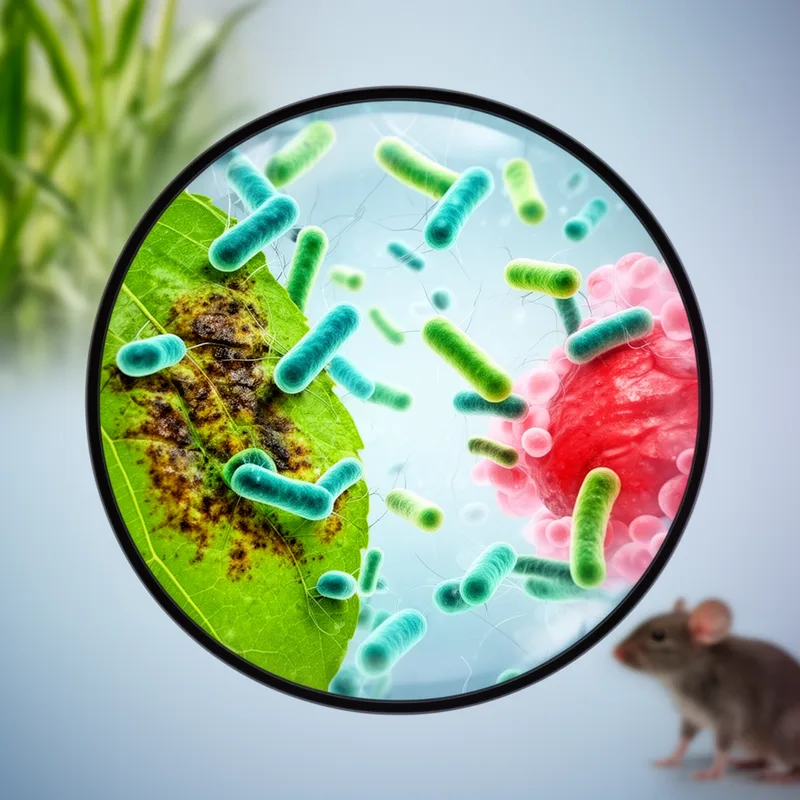
family Pseudomonodaceae
- noun
- /ˈfæmɪli ˌsuːdəˌmoʊnəˈdeɪsi/
- Specialized
- The family Pseudomonodaceae includes bacteria that can infect both plants and animals.
Examples
-
Several members of the family Pseudomonodaceae are notorious for causing diseases in agricultural crops.
-
Researchers are studying antibiotic resistance within the family Pseudomonodaceae to find new treatments.
-
The family Pseudomonodaceae includes various pathogenic species.
-
Many plants suffer from diseases caused by the family Pseudomonodaceae.
-
Researchers are studying antibiotic resistance within the family Pseudomonodaceae to find new treatments.
-
Several members of the family Pseudomonodaceae are notorious for causing diseases in agricultural crops.
-
The family Pseudomonodaceae includes bacteria that can infect both plants and animals.
Synonyms
A family of long, thin bacteria that can cause disease in plants and animals
Surface Forms
Morphology
The phrase is fully compositional: it combines the noun 'family' (a taxonomic grouping) with the taxon name 'Pseudomonodaceae', so the meaning 'the family called Pseudomonodaceae' is directly derivable. Taxonomic naming conventions of 'family + name' are common across languages, so a learner who knows both constituents will readily understand the expression.
Etymology
Family Pseudomonodaceae comes from the main genus name Pseudomonas plus the ending -aceae, which marks a 'family' in scientific names. Pseudomonas comes from old words meaning 'false' and 'single unit', so the full name points to a group of related bacteria.

