

family Nepenthaceae
- noun
- /ˈfæmɪli nɛˈpɛnθeɪsi/
- Specialized
- All members of the family Nepenthaceae produce unique pitcher-shaped leaves for trapping insects.
Examples
-
The family Nepenthaceae is renowned for its carnivorous species distributed mainly in Southeast Asia.
-
Researchers discovered a new species within the family Nepenthaceae during their expedition.
-
The family Nepenthaceae includes many fascinating species.
-
Did you know that the family Nepenthaceae has unique adaptations?
-
The family Nepenthaceae is known for its diverse species that use specialized traps to capture insects.
-
Researchers discovered a new species within the family Nepenthaceae during their field study in tropical rainforests.
-
Plants from the family Nepenthaceae thrive in nutrient-poor soil by attracting and digesting insects.
Synonyms

A group of tropical plants with pitcher-shaped leaves that catch and eat insects
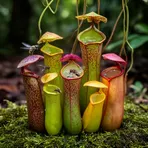
A group of insect-eating plants with cup-shaped leaves that trap insects
Surface Forms
Morphology
The phrase literally names the taxonomic group: 'family' indicates a scientific grouping and 'Nepenthaceae' specifies the group (pitcher-plant family). A learner who knows both constituents can directly derive that this refers to the Nepenthaceae plant family, and this compositional taxonomic pattern is cross-linguistically common.
Etymology
Family Nepenthaceae names the 'group' of tropical pitcher plants built around the genus Nepenthes. These plants have hollow, cup-like leaves that catch and eat insects, so imagining a 'family' of pitcher plants helps you remember it means the group of Nepenthes species.

