
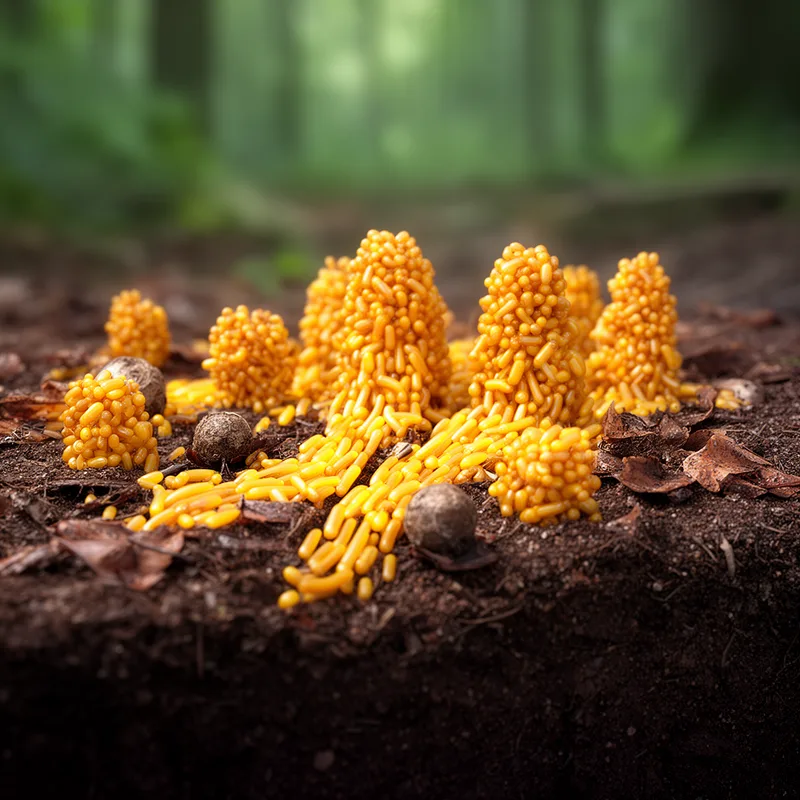
family Myxobacteriaceae
- noun
- /ˈfæmɪli ˌmɪksoʊbækˈtɪəriˌeɪsi/
- Specialized
- Many members of the family Myxobacteriaceae exhibit cooperative behaviors unusual for bacteria.
Examples
-
The family Myxobacteriaceae is studied for its role in decomposing organic matter.
-
Scientists discovered several new species within the family Myxobacteriaceae in soil samples from the rainforest.
-
The family Myxobacteriaceae is fascinating due to its social behavior.
-
Many researchers study the family Myxobacteriaceae for its unique properties.
-
Many members of the family Myxobacteriaceae exhibit cooperative behaviors unusual for bacteria.
-
The family Myxobacteriaceae is studied for its role in decomposing organic matter.
-
Scientists discovered several new species within the family Myxobacteriaceae in soil samples from the rainforest.
Synonyms
A group of soil and dung bacteria that live together and break down dead plants
Surface Forms
Morphology
family + Myxobacteriaceae
The phrase is compositionally clear in that 'family' marks a taxonomic grouping and 'Myxobacteriaceae' is the taxon name, so a learner can infer it denotes the family called Myxobacteriaceae. However, the detailed content (that it is a bacterial family with specific social behaviour and habitat) is specialized and not predictable from the constituents alone, since the taxon name is technical and opaque to most learners.
Etymology
The noun family Myxobacteriaceae comes from the Greek root myxo- meaning 'slime' and the word bacteriaceae meaning 'bacterial family'. These bacteria often move together like a slimy wave and form small fruit-like groups, so the name helps you remember they are social soil bacteria.

