
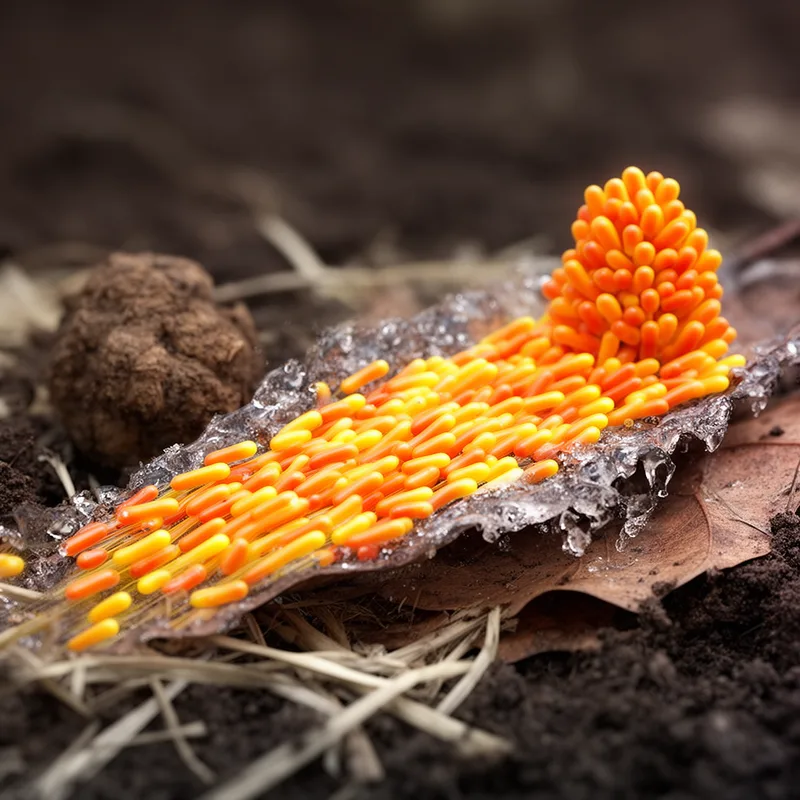
Myxobacteriaceae
- noun
- /mɪksoʊbækˈtɪəriˌeɪsiː/
- Specialized
- Some Myxobacteriaceae can form fruiting bodies when food is scarce.
Examples
-
Myxobacteriaceae play an important role in the decomposition of organic matter in soils.
-
In nutrient-poor conditions, Myxobacteriaceae can form unique fruiting bodies to reproduce.
-
Scientists have discovered new species within the Myxobacteriaceae family in tropical environments.
-
The Myxobacteriaceae family is fascinating due to its social behavior.
-
Many studies focus on Myxobacteriaceae in soil ecosystems.
-
Myxobacteriaceae play a crucial role in breaking down organic matter in soil ecosystems.
-
Researchers are studying the social behavior of Myxobacteriaceae to understand their complex life cycles.
Synonyms
Bacteria that live in soil and dung and form groups that work together
Surface Forms
Morphology
Myxobacteriaceae = bacteria (semi-transparent) = myxo + bacteri + aceae
The formation signals a bacterial family (bacteria + -aceae), but it is a technical taxonomic term built from combining forms (myxo-, bacteri-) that are unfamiliar to most learners.
Etymology
Myxobacteriaceae comes from Greek parts: myxo- meaning 'slime', bacteria meaning 'small life', and the family ending -aceae. So, Myxobacteriaceae literally means the 'family of slime bacteria', which fits these soil microbes that move in slimy groups and form little fruiting bodies when food is low.

