
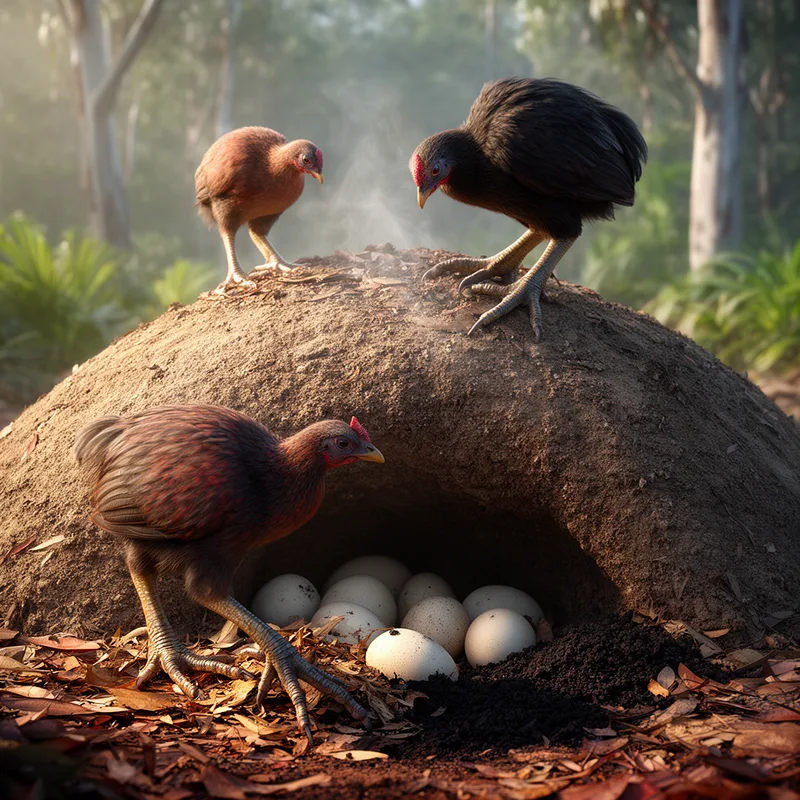
family Megapodiidae
- noun
- Specialized
- Members of the family Megapodiidae are known for burying their eggs in warm mounds to incubate them.
Examples
-
The family Megapodiidae consists of birds native to Australasia, distinguished by their large feet and distinctive nesting methods.
-
The family Megapodiidae includes several species unique to the Australasian region.
-
Scientists have studied the unusual nesting behavior of birds in the family Megapodiidae.
-
The family Megapodiidae includes several unique bird species.
-
Many birds in the family Megapodiidae are known for their nesting behavior.
-
Members of the family Megapodiidae are known for burying their eggs in warm mounds made of decomposing vegetation.
-
Scientists have studied the unique nesting habits of birds in the family Megapodiidae that use mounds for incubation.
Synonyms
Medium-sized ground birds from Australia and nearby islands that build mounds to keep their eggs warm
Surface Forms
Morphology
The phrase is fully compositional: 'family' denotes a scientific grouping and 'Megapodiidae' is the taxon name for a group of birds, so the combined meaning 'the family Megapodiidae (a group of megapode birds)' is directly derivable from the constituents. This taxonomic naming pattern is common across languages and follows standard English noun phrase composition, making it immediately understandable to a learner who knows both words.
Etymology
Family Megapodiidae comes from two old Greek parts that mean 'large' and 'foot': mega = 'large' and pod = 'foot'. These birds have very big feet and build warm mounds of leaves to bury their eggs, so the name helps you remember this group of birds.

