

family Juncaceae
- noun
- /ˈfæmɪli dʒʌnˈkeɪsi/
- Specialized
- The family Juncaceae includes about 400 species of rushes found worldwide.
Examples
-
Many wetlands are dominated by plants from the family Juncaceae.
-
Botanists distinguish the family Juncaceae from grasses by their solid stems and simple flowers.
-
The family Juncaceae includes many types of rushes.
-
Many species from the family Juncaceae thrive in wetlands.
-
Botanists distinguish the family Juncaceae from grasses by their solid stems and simple flowers.
-
Many wetlands are dominated by plants from the family Juncaceae.
-
The family Juncaceae includes about 400 species of rushes found worldwide.
Synonyms

A group of plants like rushes that grow in wet places
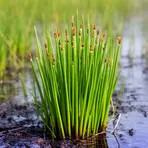
A family of grass-like plants with round stems that grow in wet places
Surface Forms
Morphology
The phrase is a straightforward taxonomic label formed by the noun 'family' (a scientific grouping) plus the proper name 'Juncaceae' (the named group of rush-like herbs), so the overall meaning — the family called Juncaceae — follows directly from its parts. This compositional pattern (family + family-name) is cross-linguistically common and therefore a B1 learner who knows both constituents would readily understand the MWE.
Etymology
Family Juncaceae gets its name from the Latin word Juncus, meaning 'rush', a grass-like plant, and the plant family ending -aceae that shows a group of related plants. So the name literally means 'the plant family of rushes', which is why it refers to a family of rush-like plants.

