
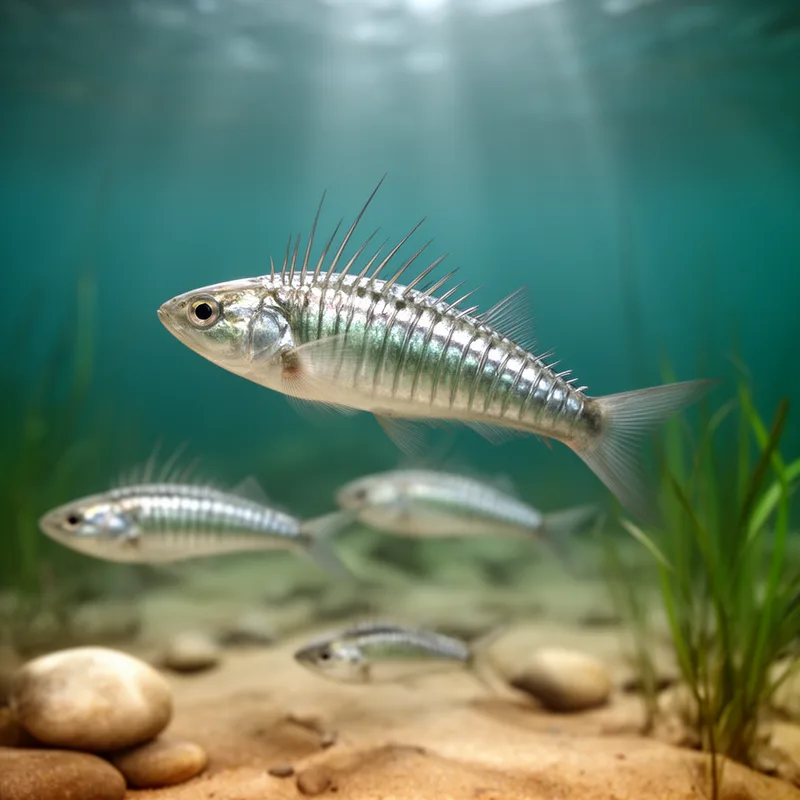
family Gasterosteidae
- noun
- /ˈfæmɪli ˌɡæstəˈrɒstɪdi/
- Specialized
- Sticklebacks, which belong to the family Gasterosteidae, are common in northern hemisphere waters.
Examples
-
Species in the family Gasterosteidae are often found in both marine and freshwater habitats.
-
Fish belonging to the family Gasterosteidae are easily recognizable due to their slender bodies and armored plates.
-
Researchers study the evolution of armor plates in fish from the family Gasterosteidae.
-
The family Gasterosteidae includes various species of sticklebacks.
-
Did you know that the family Gasterosteidae has armored plates?
-
Many species in the family Gasterosteidae exhibit unique breeding behaviors in shallow waters.
-
The family Gasterosteidae is known for its distinctive sticklebacks, which can be found in both freshwater and marine environments.
Synonyms
A family of small spiny fish like sticklebacks found in northern fresh and coastal waters
Surface Forms
Morphology
This is a straightforward taxonomic label combining 'family' (a scientific grouping) with the taxon name 'Gasterosteidae', so the phrase simply means the family named Gasterosteidae — a group of related stickleback species. Although the name is technical, the compositional structure is regular and cross-linguistically common, so a learner who knows both constituents can infer the meaning.
Etymology
Family Gasterosteidae may come from the Greek parts gaster and osteon, meaning 'stomach' and 'bone', because these fish have bony plates along their belly and sides. So, the name helps you remember they are small, armored fish called 'sticklebacks'.

