
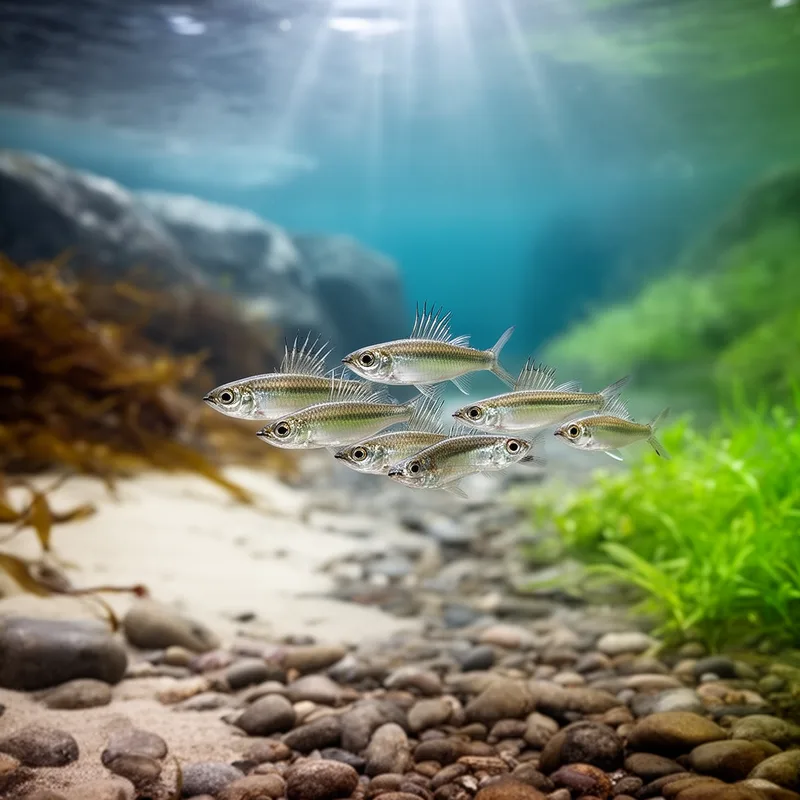
Gasterosteidae
- noun
- /ˌɡæstəˈroʊstɪˌdeɪ/
- Specialized
- The Gasterosteidae family includes several species of sticklebacks.
Examples
-
The family Gasterosteidae includes several well-known species of sticklebacks.
-
Members of the Gasterosteidae family are found in both marine and freshwater environments.
-
Biologists study Gasterosteidae to understand evolutionary adaptation in fish.
-
Did you know that Gasterosteidae are often found in freshwater habitats?
-
Biologists study Gasterosteidae to understand evolutionary adaptation in fish.
-
Members of the Gasterosteidae family are found in both marine and freshwater environments.
-
The family Gasterosteidae includes several well-known species of sticklebacks.
Synonyms
Small sea and freshwater fish with long thin bodies and bony plates like sticklebacks
Compounds
- Specialized
Small sea and freshwater fish with long thin bodies and bony plates like sticklebacks
Surface Forms
Morphology
Gasterosteidae = Gasterosteus (opaque) = Gasterosteus + idae
Formed by the specialized taxonomic family suffix '-idae' added to the genus name; this is a scientific naming convention unfamiliar to average learners.
Etymology
The word Gasterosteidae comes from the Greek roots gaster- 'stomach' and oste- 'bone', giving the image of a 'bony belly'. This is a helpful image because sticklebacks have hard bony plates and spines along their belly and sides, so the name fits this family of small spiny fish.

