

family Elaeagnaceae
- noun
- /ˈfɛmɪli ˌɛleɪəˈɡneɪsiˌi/
- Specialized
- The family Elaeagnaceae includes the Russian olive and the oleaster.
Examples
-
Many species in the family Elaeagnaceae are valued for their drought resistance.
-
Horticulturists study the family Elaeagnaceae for its unique adaptations to poor soils.
-
The family Elaeagnaceae includes various shrubs.
-
Many plants in the family Elaeagnaceae are drought-resistant.
-
Horticulturists study the family Elaeagnaceae for its unique adaptations to poor soils.
-
Many species in the family Elaeagnaceae are valued for their drought resistance.
-
The family Elaeagnaceae includes the Russian olive and the oleaster.
Synonyms

A group of shrubs and small trees often with silvery leaves and spiny branches like the Russian olive
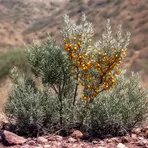
A group of shrubs and small trees that often have thorns and include oleasters
Surface Forms
Morphology
The phrase is fully compositional: 'family' denotes a taxonomic grouping and 'Elaeagnaceae' is the name of that group, so together they straightforwardly mean the biological family called Elaeagnaceae. This follows common cross-linguistic scientific naming patterns, so a learner who knows both constituents can infer it refers to that group of shrubs/small trees.
Etymology
Family Elaeagnaceae names a group of shrubs and small trees that often look a little like olive trees. Because many have silvery leaves or small olive-like fruits, you can remember Elaeagnaceae as the 'olive family', which explains why it includes the Russian olive and oleaster.

