
family Chlamydiaceae
- noun
- /ˈfæmɪli klæˈmɪdiˌeɪsi/
- Specialized
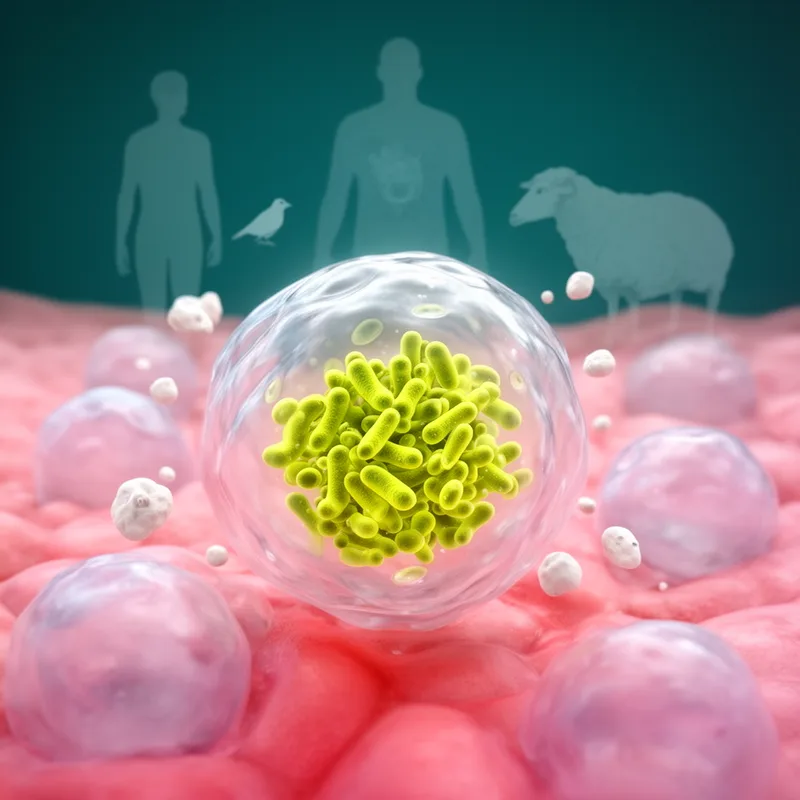
- The family Chlamydiaceae includes bacteria responsible for diseases in both humans and animals.
Examples
-
Members of the family Chlamydiaceae are known for their unique intracellular lifestyle.
-
Researchers studied the genetic diversity within the family Chlamydiaceae to understand disease transmission.
-
The family Chlamydiaceae includes several important pathogens.
-
Many species in the family Chlamydiaceae are known to cause infections.
-
The family Chlamydiaceae includes bacteria that can lead to significant health issues in mammals.
-
Scientists identified several new species within the family Chlamydiaceae that affect wildlife.
-
Infections caused by the family Chlamydiaceae can have severe consequences for both animals and humans.
Synonyms

A family of bacteria that must live inside warm-blooded animals, including humans
Surface Forms
Morphology
The phrase is directly compositional: 'family' denotes a taxonomic grouping and 'Chlamydiaceae' names a group of bacteria, so the combined phrase plainly means the taxonomic family consisting of those bacteria. This scientific naming pattern is regular and cross-linguistically familiar, so a B1 learner who knows both constituents would be able to infer the MWE's meaning.
Etymology
Family Chlamydiaceae comes from the Greek word chlamys, meaning a 'cloak', because these bacteria hide inside the cells of other animals as if wrapped in a cloak. So the name helps you remember that this family contains bacteria that live inside warm-blooded animals like humans.

