
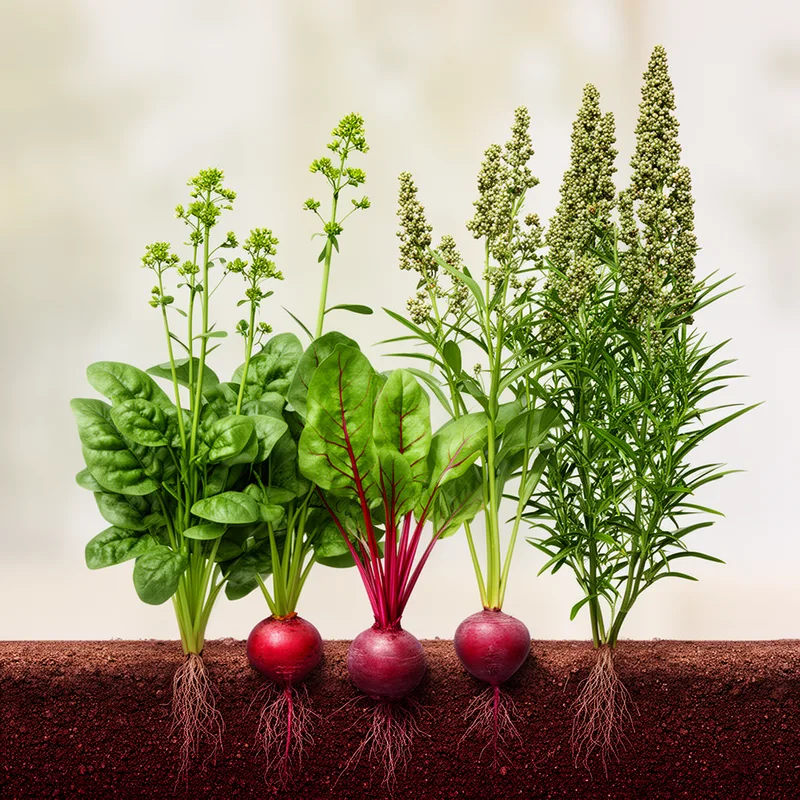
family Chenopodiaceae
- noun
- /ˈfɛmɪli kəˌnɒpəˈdiːeɪsi/
- Specialized
- Spinach, as a member of the family Chenopodiaceae, shares certain characteristics with beets and quinoa.
Examples
-
The family Chenopodiaceae includes several species important for their edible leaves and roots.
-
Spinach belongs to the family Chenopodiaceae.
-
Botanists once classified many salt-tolerant plants in the family Chenopodiaceae.
-
The family Chenopodiaceae includes many edible plants.
-
The family Chenopodiaceae is known for its nutritious plants, including spinach and beets.
-
Members of the family Chenopodiaceae are often cultivated for their edible leaves.
-
In the family Chenopodiaceae, you'll find a variety of species that thrive in different climates.
Synonyms
A group of plants that make flowers, like spinach and beets

A group of flowering plants like spinach and beets
Surface Forms
Morphology
family + Chenopodiaceae
This is a straightforward taxonomic noun phrase: 'family' + a scientific family name. If a learner knows the constituent words (in particular that Chenopodiaceae is the name of a plant family), the overall meaning 'the family called Chenopodiaceae' is directly derivable and non-idiomatic, following a cross-linguistically common pattern for biological classification.
Etymology
Family Chenopodiaceae comes from Greek words meaning goose and foot because many leaves look like a small goose's foot. So the name means the 'goose-foot family' and refers to plants such as spinach, beets, and quinoa.

