

fallow
 1
7.1
1
7.1

- noun
- /ˈfæloʊ/
- Two other rotations that proved successful were wheat/corn/millet/fallow and wheat/corn/millet.
- a fallow period
- wheat-fallow
- reductions in fallow
Examples
-
Several of the successful systems have no water-wasting summer fallow periods between crops.
Academic text (2005) -
Yield for corn was about 15 percent lower in the rotations of wheat/corn/millet and wheat/corn/sunflower/millet than in wheat/corn/millet/fallow and wheat/corn/fallow.
Academic text (2005) -
Rice after fallow also showed a similar trend.
Academic text (2014) -
Long fallow periods became rare as population growth forced all available land into cultivation.
Academic text (1991) -
Because the practice conserves soil moisture, the reduction of fallow has progressively increased the vulnerability of the country to drought.
Academic text (1992) -
Akamba farmers once relied on long fallows to replenish the soil.
Academic text (1994) -
Part of the new cereal hectarage came from the reduction of fallow; much of the rest came from the extension of cultivation into marginal, low-rainfall areas.
Academic text (1992) -
In its management of how poppies are grown, harvested, and sold, the TMO commonly requires two seasons for fallow or sowing other crops, usually fodder, before allowing farmers to resow their fields with poppies.
Academic text (2011) -
Because soil carbon in eroded, marginal lands is generally depleted by a past history of erosion or intensive land use, rotation to minimum tillage or fallow conditions (with a cover of vegetation) is likely to increase the soil's potential to store carbon.
Academic text (2007) -
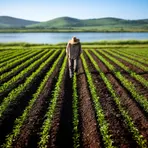
Farmers often leave fields fallow for a season to improve soil fertility.
Antonyms
Compounds


 1
7.8
1
7.8
A medium-sized deer with wide flat antlers and a light brown coat with white spots in summer
How Cultivated

Surface Forms
Etymology
Fallow originally meant 'pale brown', like the colour of ground with no crops. A fallow is land left unseeded for a time so the soil can get its nutrients back.