

to fall open
 4
3.0
4
3.0

- phrasal verb
- /fɔl ˈoʊpən/
- My truck bed fell open and spilled my tools all over.
- the mouth fell open
- the jaw fell open
- the door fell open
Examples
-
And it would just randomly fall open.
-
One of them had fallen open on the floor near my chair.
Fiction book (1992) -
A small steel door fell open, and he pulled out a red telephone.
Fiction book (2000) -
My mother's mouth fell open, then she buried her head in her hands.
Fiction book (1992) -
You what? His mouth fell open as Rina explained what had happened.
Fiction book (1997) -
The door sagged, and as the assault continued, it broke loose and fell open.
Fiction book (1995) -
"Phillip had reached over for the subs, and now his mouth fell open.
Fiction book (1999) -
Father's mouth fell open and his tongue flicked out and then back in, like an alert frog's.
Fiction book (1994) -
When she saw him, her eyes popped comically, and her mouth fell open in an audible gasp.
Fiction book (1993) -
Everyone in the audience gasped as the magician's secret was revealed, causing their mouths to fall open in disbelief.
Synonyms
 64
2.5
64
2.5
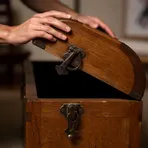
Make something not closed, for example by removing a lock or cover
 13
2.1
13
2.1
To open something suddenly by force, for example a locked door or jar
 11
3.3
11
3.3
To open suddenly, often because of wind or force
 3
3.7
3
3.7
To have the mouth or jaw suddenly fall open because of surprise
Antonyms
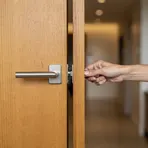

How Open

Surface Forms
Morphology
The meaning is directly compositional: 'fall' (to move or drop downward) combined with 'open' (to become unclosed) yields an object becoming open as a result of dropping or by an involuntary movement. This motion→result construction is regular and cross-linguistically common, so a B1 learner who knows both words can readily infer the MWE's meaning.
Etymology
Fall open gives a clear picture: something closed falls down and becomes open, like a person's jaw that drops in 'surprise' or a heavy book that slips from your hands and falls open. So, it means to open suddenly or without control, often because of 'surprise' or gravity.