
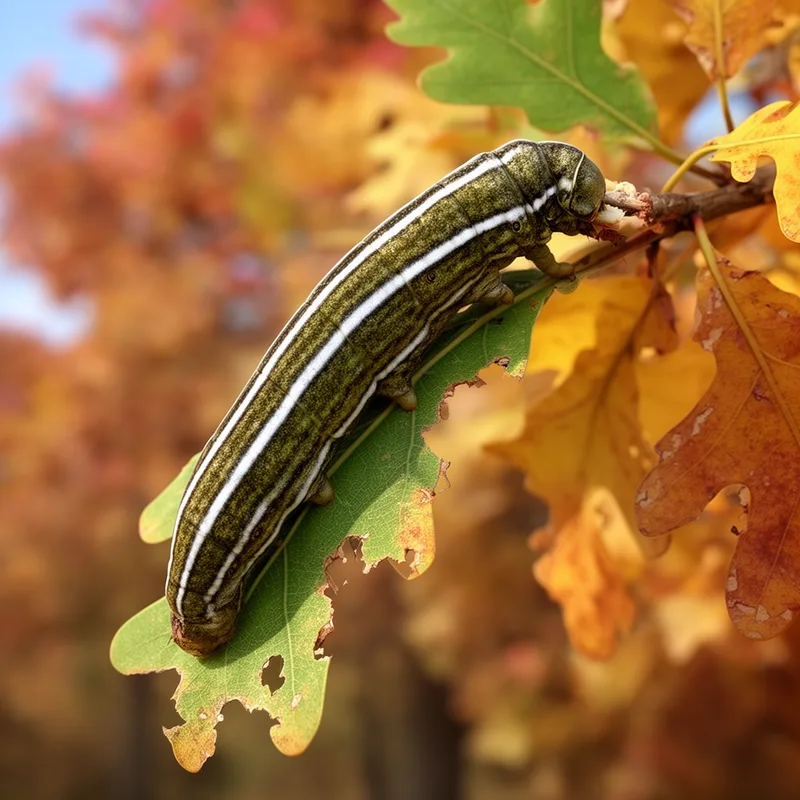
fall cankerworm
- noun
- Specialized
- The fall cankerworm can cause serious defoliation in oak and elm trees each autumn.
Examples
-
To control fall cankerworm infestations, experts recommend banding tree trunks in late fall.
-
Gardeners watched as fall cankerworms devoured large portions of the orchard's foliage.
-
The fall cankerworm infests apple trees every autumn.
-
Many gardeners are concerned about the fall cankerworm this year.
-
In late autumn, fall cankerworms harm the leaves of deciduous trees, leaving them bare.
-
The appearance of fall cankerworms in the orchard signals the start of leaf damage on many trees.
-
During autumn, fall cankerworms can be seen crawling on the branches of trees, eating away the foliage.
Synonyms

A green caterpillar that eats the leaves of fruit and shade trees
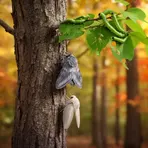
A North American moth whose males have grey wings and wingless females produce fall cankerworm caterpillars
Surface Forms
Morphology
The compound combines 'fall' (autumn) with 'cankerworm' (a tree‑damaging caterpillar), so the meaning — a cankerworm associated with the autumn season — is directly and compositionally predictable from the parts. This noun–noun naming pattern is transparent and common cross-linguistically, so a B1 learner who knows both constituents would understand the MWE.
Etymology
The noun fall cankerworm comes from two parts, fall and cankerworm: fall is the season when the striped caterpillars appear and cankerworm was an old name for a leaf-eating 'worm' that can make trees look 'sick'. That's why the name tells you both what the insect does and when it appears.

