
Alsophila pometaria
- noun
- Specialized
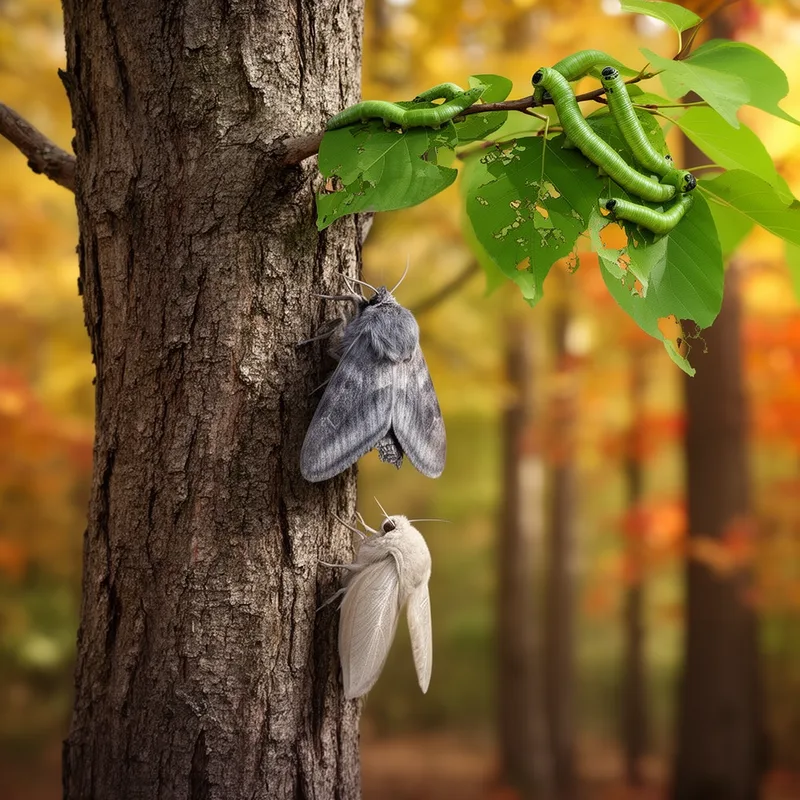
- The larvae of Alsophila pometaria are commonly known as fall cankerworms and can cause significant damage to trees.
Examples
-
Male Alsophila pometaria moths are easily recognized by their grey wings, while the females are wingless.
-
Gardeners often monitor outbreaks of Alsophila pometaria to protect their trees from defoliation.
-
The Alsophila pometaria is often found in deciduous forests.
-
Have you ever seen an Alsophila pometaria in the wild?
-
Gardeners often monitor outbreaks of Alsophila pometaria to protect their trees from defoliation.
-
The larvae of Alsophila pometaria are commonly known as fall cankerworms and can cause significant damage to trees.
-
Male Alsophila pometaria moths are easily recognized by their grey wings, while the females are wingless.
Surface Forms
Morphology
Alsophila + pometaria
This is a Latin scientific binomial rather than a phrase composed of common English words; one constituent is an obscure genus name and the other is non-dictionary, so a B1 learner who knows the listed constituents would not be able to derive the meaning. Taxonomic names are essentially arbitrary labels across languages and require prior exposure or explicit teaching, making the expression non-compositional for typical learners.
Etymology
Alsophila pometaria probably comes from old words: Alsophila means 'grove-loving' and pometaria refers to 'fruit trees'. So imagine a moth in an orchard whose caterpillars eat leaves in fall, and that explains why the name fits the moth whose larvae are called 'fall cankerworms' and can damage trees.

