

facile
 1
7.8
1
7.8

- adjective
- /ˈfæsl/
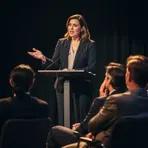
- The speaker was so facile that the audience easily understood complex topics.
Loading YouTube…
Watch on YouTubeThat was my job, you know, to be a facile prevaricator.
- That was my job, you know, to be a facile prevaricator.
Examples
-
The teacher makes every effort to provide language experiences for the children, through which they can construct a rich and facile knowledge about language.
Academic text (1991) -
The directory, she says, will help members maintain better contact with one another and will lead to a more facile exchange of ideas and information.
Academic text (1997) -
Seth's mouth was already forming a facile response, but he thought better of it and said nothing.
Fiction book (1995) -
Normally a facile writer, in this piece Grove must have labored over both rhetoric and tone to communicate a precise personal emotion.
Academic text (1995) -
Obama is extremely intelligent and thus facile at summarizing his opponents' views at least as well as they could summarize them themselves.
Blog text (19) -
More affiliative persons are expected to be more facile in dealing with others; they are expected to be more adept, skillful, and more at ease in social interactions.
Academic text (1994) -
She has a facile ability to articulate her thoughts clearly during debates.
-
His facile writing style makes it enjoyable to read his articles.
Synonyms
 61
6.3
61
6.3
To speak or write clearly so people pay attention
 4
2.8
4
2.8
Expressing yourself easily and clearly in speech, writing, or performance
 3
7.9
3
7.9
Able to speak in a way that charms and persuades people

A person who speaks in a calm, charming way to persuade others
Antonyms

Compounds


- Formal
A simple idea about why something happened that misses important facts
How Expressive

Surface Forms
Etymology
Facile comes from the Latin facilis, which means 'easy', and from facere 'to do'. Think of the word facility, which is about ease or skill; so facile for speech means speaking 'with ease' — fluent and clear.