
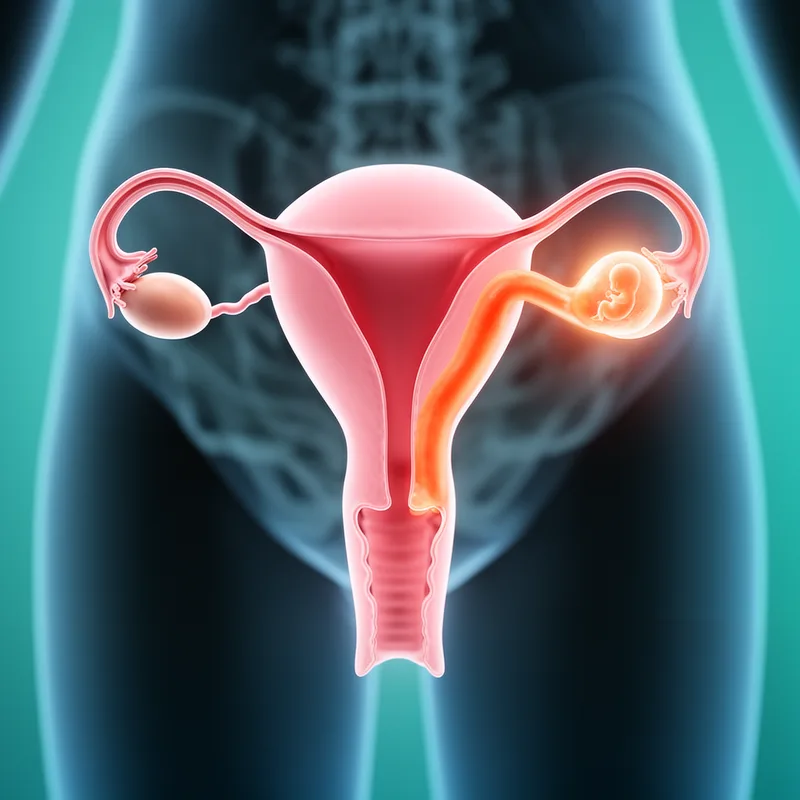
extrauterine pregnancy
- noun
- /ˌɛkstrəˈjuːtərɪn ˈprɛɡnənsi/
- Specialized
- Doctors must consider the possibility of an extrauterine pregnancy in women with certain symptoms early in pregnancy.
Examples
-
After severe abdominal pain, she was diagnosed with an extrauterine pregnancy requiring immediate medical attention.
-
An extrauterine pregnancy can be life-threatening if not treated promptly by healthcare professionals.
-
An extrauterine pregnancy can be life-threatening.
-
Many women are unaware of their extrauterine pregnancy until it is too late.
-
After severe abdominal pain, she was diagnosed with an extrauterine pregnancy requiring immediate medical attention.
-
An extrauterine pregnancy can be life-threatening if not treated promptly by healthcare professionals.
-
Doctors must consider the possibility of an extrauterine pregnancy in women with certain symptoms early in pregnancy.
Synonyms

 6
6.4
6
6.4

A pregnancy when the fertilized egg grows outside the womb, usually in a fallopian tube
 1
7.4
1
7.4
A pregnancy where the fertilized egg grows in a Fallopian tube instead of the womb
A pregnancy in which the fertilised egg attaches and grows outside the uterus

A pregnancy in which the baby grows outside the womb, usually in a fallopian tube

A pregnancy when the developing baby grows outside the womb, usually in a fallopian tube

A pregnancy in which the embryo grows outside the womb, often in a fallopian tube

A rare pregnancy when the fertilized egg grows in an ovary instead of the womb

A rare pregnancy in which the baby grows in the abdomen instead of the womb
Surface Forms
Morphology
If a learner knows 'extrauterine' ('situated outside the uterine cavity') and 'pregnancy' ('the condition of having a developing fetus'), the combined meaning 'a pregnancy occurring outside the uterus' is directly and transparently derivable from the parts. This is a compositional medical compound (equivalent to 'ectopic pregnancy') and follows predictable English formation, so learners who know the constituents will understand it.
Etymology
The medical term extrauterine pregnancy comes from extra, meaning 'outside', and uterine, relating to the 'uterus' or 'womb'. So it describes a pregnancy that grows 'outside' the 'uterus', often in a tube next to the womb, and means a pregnancy that can be dangerous and needs quick treatment.