
extrachromosomal


 1
9.1
- adjective
- /ˌɛkstrəˈkroʊməˌsoʊməl/
- Specialized
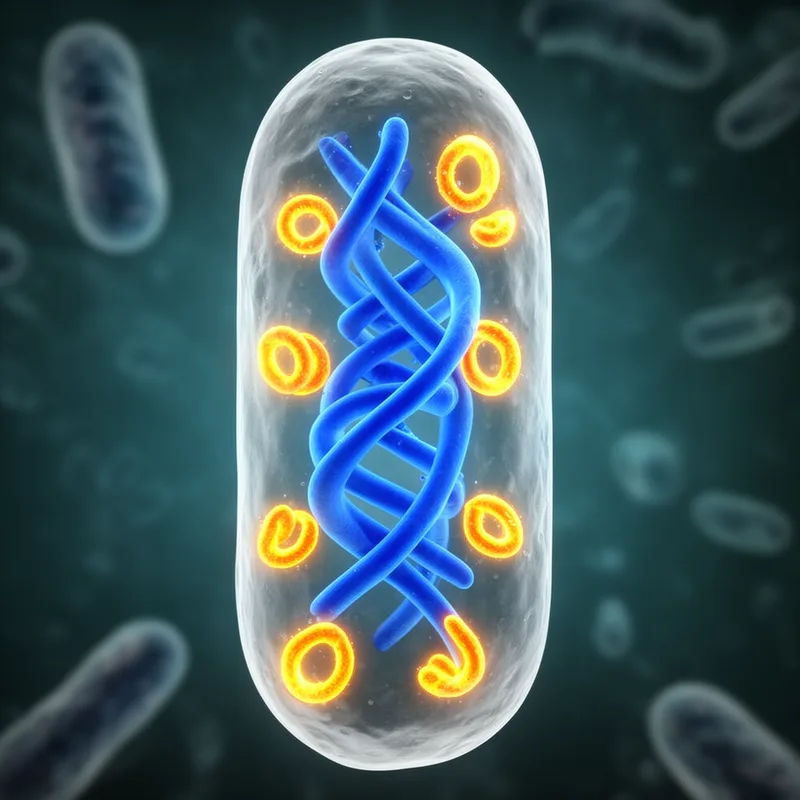
- While most of the essential genetic information for each bacterium is contained within a single circular deoxyribonucleic acid (DNA) strand, bacteria also carry extrachromosomal material in the form of plasmids and transposons.
Examples
-
The genes are commonly carried on extrachromosomal plasmids that are transferred to other microbes through conjugation.
Academic text (2000) -
In addition to chromosomal DNA, many bacteria possess extrachromosomal plasmids that aid in antibiotic resistance.
-
Researchers are studying extrachromosomal elements to understand their role in genetic diversity among microorganisms.
-
Some viruses can exist as extrachromosomal DNA within host cells, impacting their genetic expression.
Synonyms
 1
9.9
A piece of DNA inside a cell that is separate from the chromosomes
Surface Forms
Morphology
extrachromosomal = chromosomal (transparent) = extra + chromosome + al
The prefix 'extra-' (outside) directly modifies the adjective 'chromosomal' to mean outside the chromosomes, a clear scientific formation.
Etymology
Extrachromosomal breaks into extra- meaning 'outside' and chromosome, whose parts mean 'color' and 'body' because chromosomes looked like colored bodies in cells. So extrachromosomal means things like DNA that are 'outside the chromosomes', separate from the cell's main chromosome set.