

evisceration
 1
9.9
1
9.9

- noun
- /ɪˌvɪsəˈreɪʃən/
- NSFW
- During the surgery, the surgeon performed the evisceration to remove the damaged organs.
Examples
-
The evisceration of the animal is a critical step in ensuring the meat is safe for consumption.
-
After the evisceration, the medical team carefully examined the internal organs for signs of disease.
-
He turned his attention to the evisceration of the corpse.
Fiction book (1991) -
Cook arranged for the evisceration, four tons of entrails according to my notes.
Fiction book (1996) -
Wound complications, including bacterial infection, hematoma, evisceration, suture abscess, and dehiscence, are not uncommon following surgery.
Academic text (2003)
Synonyms
 2
7.9
2
7.9
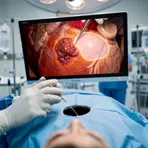
A medical operation that cuts out tissue or a growth
 2
8.3
2
8.3
Removal of part of the body by surgery to treat a disease
 1
9.9
1
9.9
Removing the internal organs from a body, especially the intestines

Removal of organs from a body area in a major operation, often the eye or lower belly
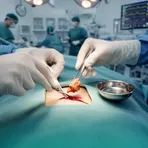
The removal of part of the body by surgery

The removal of a body part or tissue by surgery
Antonyms

Compounds

How Extensive

Surface Forms
Morphology
evisceration = eviscerate (transparent) = e + viscer + ation
Built from the verb 'eviscerate' with the nominalizing suffix '-ation'; the literal 'out' + 'internal organs' reading matches the medical sense.
Etymology
Evisceration comes from Latin parts e- 'out' and viscera 'internal organs', so it originally meant taking the organs out of a body, which is why the word now names the surgical removal of internal organs.