
evaporitic
9.5
Formed when water dries up and leaves minerals like salt
- adjective
- /ɪˈvæpəˌrɪtɪk/
- Specialized
:
evaporítico
- Geologists studied evaporitic deposits to understand how minerals like halite and gypsum formed in arid environments.
Examples
-
Materials entering deeper water by sedimentation or evaporitic reduction in lake volume can exit only by molecular diffusion (Priscu et al., 1999).
Academic text (1999) -
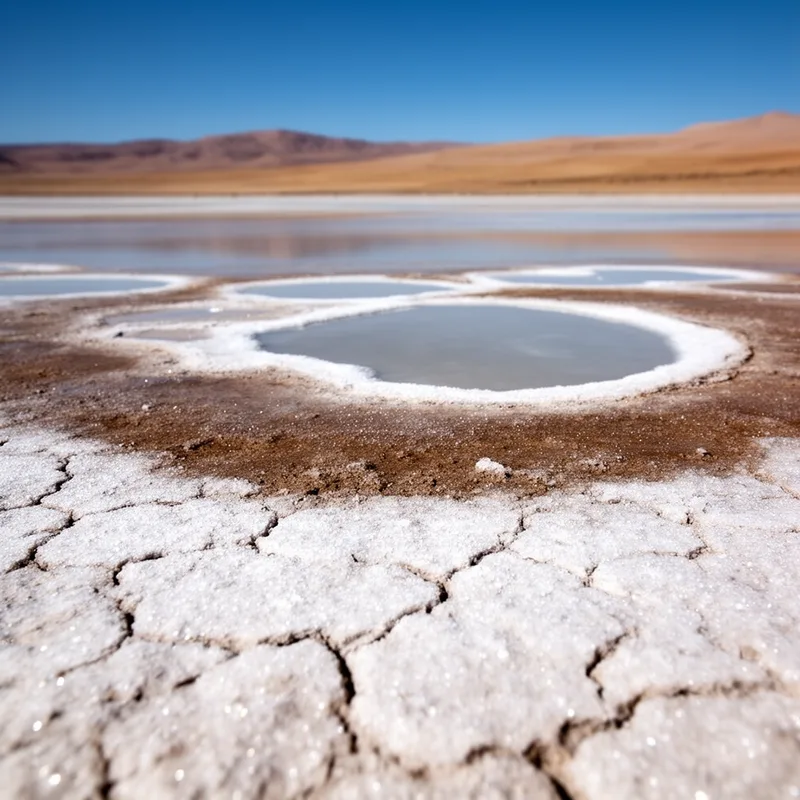
The evaporitic landscape revealed extensive salt flats formed from the evaporation of ancient lakes.
-
During the dry season, evaporitic processes create mineral crusts on the lake bed as water levels drop rapidly.
Surface Forms
evaporitic positive
Morphology
Etymology
Evaporitic comes from evaporate, which has vapor meaning 'steam' or 'mist' and e- meaning 'out'. It names minerals and rocks left when water dries and the 'vapor' goes 'out', so evaporitic means 'formed by evaporation'.

