
eutherian mammal
- noun
- /juːˈθɪəriən ˈmæməl/
- Specialized
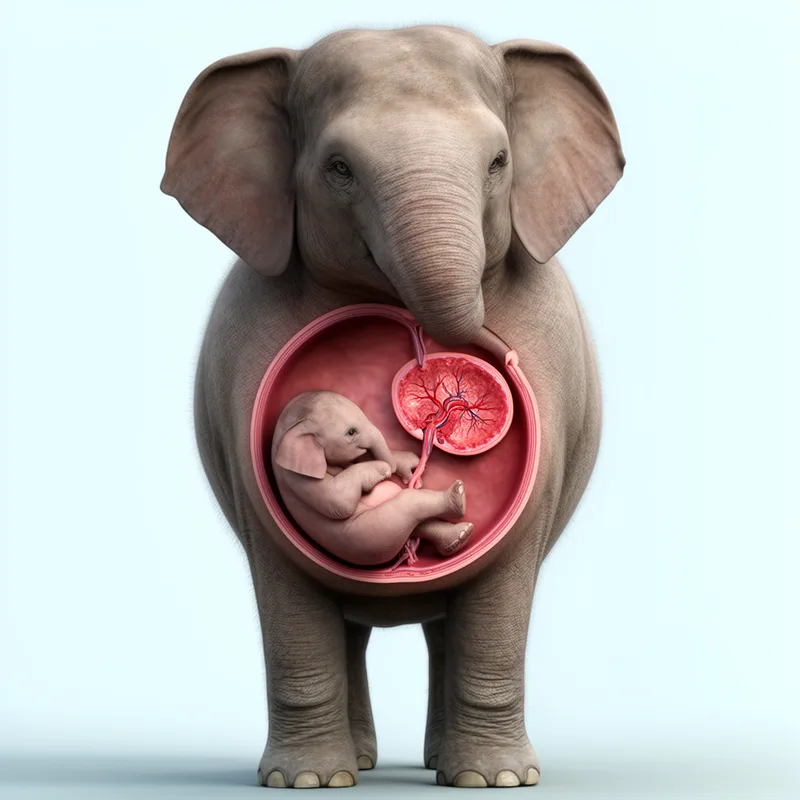
- The elephant is an example of an eutherian mammal that uses its placenta to nourish the fetus during pregnancy.
Examples
-
In vertebrates, imprinting is restricted to the therian (marsupial and eutherian) mammals, but as yet no imprinted genes have been identified in monotremes 1, 2.
Blog text (26) -
Eutherian mammals, such as dogs and cats, give birth to fully developed young instead of laying eggs.
-
Such a role is unlikely to be restricted to marsupials since eutherian mammals also depend on lactation to support their developing young after birth.
Blog text (26) -
Unlike monotremes, eutherian mammals rely on a placenta to provide essential nutrients and oxygen to their developing offspring.
Synonyms


 1
4.9
1
4.9
A warm-blooded animal that has a placenta to feed its unborn young

A mammal that has a placenta and gives birth to developed young

A mammal that has a placenta and feeds its young before birth
Surface Forms
Morphology
The phrase is directly compositional: the adjective 'eutherian' specifies a subtype of 'mammal' (placental mammals), so a learner who knows both constituent meanings can infer it refers to mammals of the Eutheria group characterized by a placenta. Although 'eutherian' is technical, the noun phrase follows regular English modification patterns, making the overall meaning predictable from its parts.
Etymology
Eutherian mammal comes from old Greek words meaning 'good beast', a picture of animals whose babies grow well inside the mother. So a eutherian mammal is a mammal that 'feeds its young before birth with a placenta'.