

ethylene
 8
7.9
8
7.9

- noun
- /ˈɛθɪliːn/
- Specialized
- "Many pathogens and insects use the volatiles, including ethylene, to recognize their targets.
- ethylene glycol
- ethylene diamine
- ethylene dichloride
Loading YouTube…
Watch on YouTubeWe take the the the edges, fold it up on itself, helps you trap some of that ethylene gas will ripen this whole basket up on the countertop.
- We take the the the edges, fold it up on itself, helps you trap some of that ethylene gas will ripen this whole basket up on the countertop.
Examples
-
Now there are tomatoes all year round, grown halfway around the world, picked when it was green, and ripened with ethylene gas.
-
OK, because fruits give off a gas called ethylene, which induces ripening in other fruits.
-
Endless Summer tomatoes make little ethylene on their own.
Academic text (1996) -
Another factoid: Cucumbers are sensitive to ethylene gas, which is emitted by some ripening fruits and vegetables.
Blog text (25) -
To try to improve flavor—and sidestep ethylene troubles—two U.S. companies recently developed commercial varieties of gene-engineered tomatoes.
Academic text (1996) -
Indeed, scientists have demonstrated that ethylene can turn on some defensive genes in plants.
-
Now there are tomatoes all year round, grown halfway around the world, picked when it was green, and ripened with ethylene gas.
-
The ripening rooms are filled with ethylene, a synthetic version of the hormone that naturally sets off ripening.
Synonyms
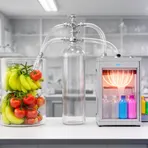
A colorless flammable gas used to make plastics and ripen fruit
Compounds

- Specialized
3
7.0
A sweet colorless poisonous liquid used in car antifreeze and to dissolve other substances

- Archaic
A toxic chemical once used to treat hookworm and other worm infections in people
Surface Forms
Morphology
Etymology
The word ethylene comes from ethyl, which is related to the old word ether, a light liquid once used as an 'anesthetic', plus the chemical ending -ene used for a group of similar hydrocarbons. So the name hints that ethylene is a light, gas-like chemical that can act as an 'anesthetic' and is used to make many plastics.