
ethnohistorian
- noun
- /ˌɛθnoʊhɪsˈtɔriən/
- Specialized
 :
etnohistoriador
:
etnohistoriador
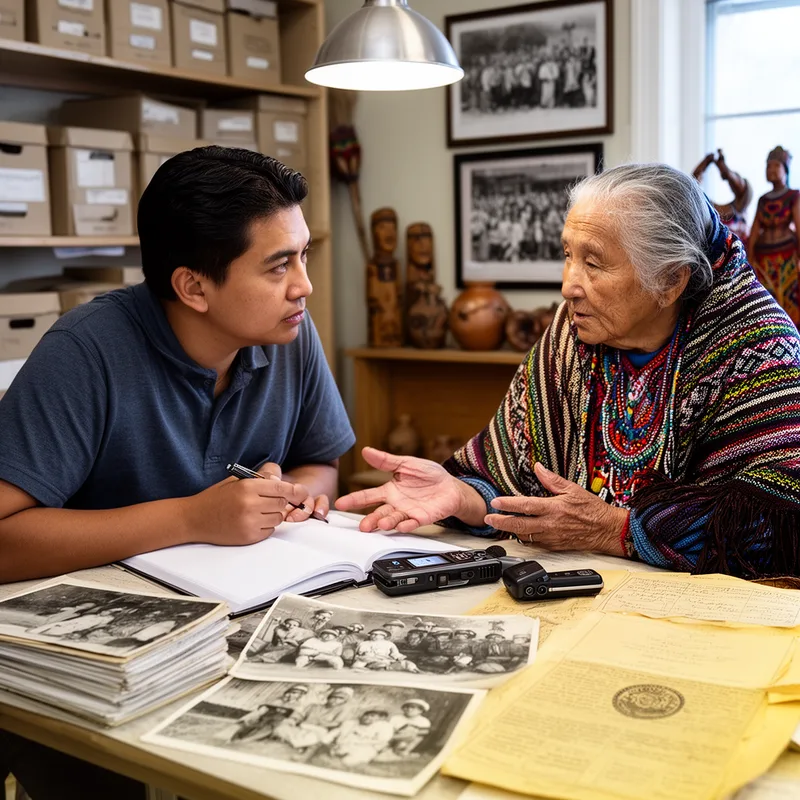
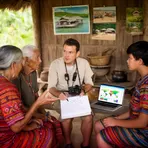
- An ethnohistorian studies the traditions and histories of specific ethnic groups to better understand their cultures.
- ethnohistorians and archaeologists
Examples
-
By the time the discovery and exploration of Tenochtitlan's Templo Mayor had made international news in the late 1970s, Aztec studies were already benefiting from a less-public groundswell of research from ethnohistorians and archaeologists.
Academic text (1997) -
Although these issues of literacy, language, and cultural interaction are hardly new to ethnohistorians of the colonial period, Mignolo adds depth to conventional understandings of European beliefs in the power of the written word by tracing the classical and Renaissance foundations of Spanish literacy philosophy and literary models as they were applied in the New World.
Academic text (1997) -
And on the side of science and scholarship, ethnohistorians protest that a successful disguise will make the case inaccessible for comparative purposes.
Academic text (1991) -
To review that debate briefly again: ethnohistorians pose the question of whether prophetic movements were indigenous or a response to external crises.
Academic text (1994) -
According to Mathews, the noted ethnohistorian of the Osages, Irving "did not mention that the flags were upside down, but this was the manner in which they were placed on the cairns of chiefs."
Academic text (2002) -
The comparative goal of this paper, then, involves drawing on the work of Indianist ethnohistorians—including my own—to throw new light on Irish developments.
Academic text (1999) -
In a four-part series entitled "Avenues to the Past," ethnohistorian Robert S. Gmmet and archeologist Joel W. Grossman look at the various ways people define time and interpret history.
Academic text (1995) -
Ethnohistorians, drawing on both frameworks, have described their project as incorporating Native American perspectives (Axtell 1981; Jennings 1982; Trigger 1982).
Academic text (1994) -
Now, most scholars in one way or another conceive of Mary as a "cultural broker," a term coined by ethnohistorians to identify persons whose lives spanned at least two different cultures and who played integral roles as interpreters, traders, or diplomats.
Academic text (2015) -
The research conducted by the ethnohistorian revealed fascinating insights into the rituals of the indigenous community.
Synonyms

 317
3.4
317
3.4

A person who studies and writes about past events
 64
5.9
64
5.9
A person who studies human societies and cultures, often by living with the people they study
 2
8.6
2
8.6
A person who studies people's lives and customs by living with and watching them
 2
7.5
2
7.5
A person who studies people's beliefs, customs, and daily life in different societies
 1
8.9
1
8.9
A scientist who studies human cultures, how people live, and how cultures change


 1
6.9
1
6.9
A person who studies how people live and behave in families and communities
Surface Forms
Morphology
Etymology
Ethnohistorian comes from the part ethno-, from the Greek ethnos meaning 'people', and the word history. So an ethnohistorian studies the past and culture of particular groups.