
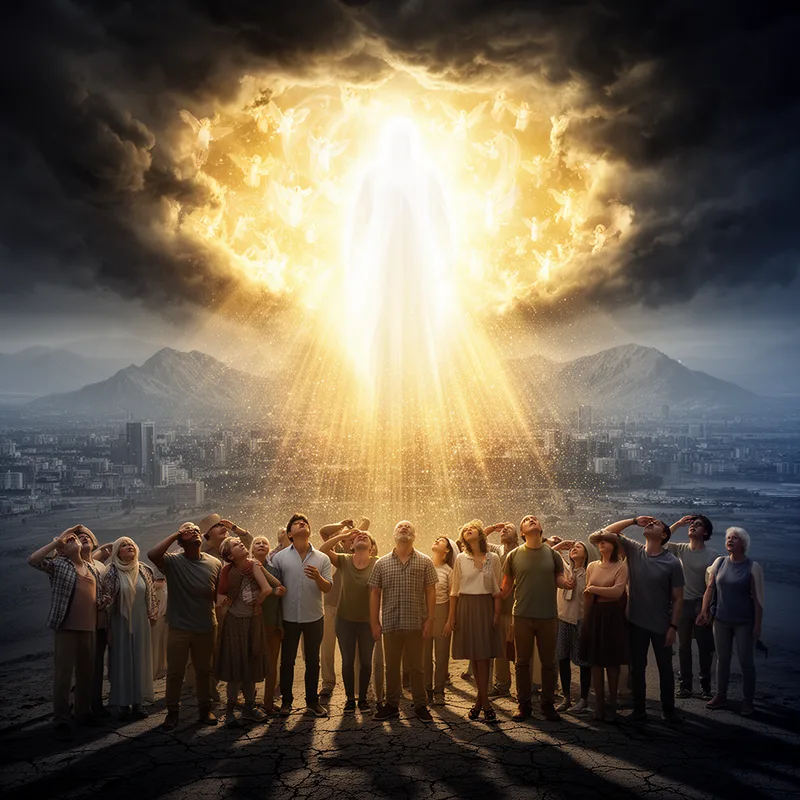
eschaton
 1
9.9
1
9.9

- noun
- /ˈɛskəˌtɒn/
- Specialized
- For some people, the eschaton conjures up medieval images of judgment and condemnation.
Examples
-
As noted above, the fact that Christ had not returned required the delay of the eschaton into a more distant future.
Academic text (2008) -
Many believers await the eschaton as a time when all will be judged and restored.
-
It's only going to happen in the eschaton, the final day.
-
When forgiveness happens, it is an effective sign that the eschaton is already breaking in.
Academic text (2015) -
The sense of his absence is only fully resolved in the eschaton.
Blog text (24) -
The eschaton is the fulfillment of the human quest for God.
Academic text (2006) -
The presence of the Incarnation and the promise of the eschaton need to be engaged simultaneously.
Academic text (2006) -
As with the topic of sin, many people in some of our churches are fixated on the end times, the eschaton.
Academic text (2015) -
Thereby, Jesus shares and expresses the entire human journey of moving in life's history toward the eschaton.
Academic text (2001) -
The Incarnation is oriented to the here and now, whereas the eschaton is delayed and absent.
Academic text (2006)
Synonyms
 134
8.6
134
8.6
A great disaster that destroys the world, often caused by a divine power
 50
7.9
50
7.9
The final event when God judges all people and decides their eternal fate
 23
7.5
23
7.5
The last day when the world ends or everything is destroyed
 19
8.8
19
8.8
In Christian belief, a future day when God judges everyone's life and decides their final place after death
 16
8.7
16
8.7
A day at the end of time when God judges everyone for their actions
 9
7.4
9
7.4
The return of Jesus Christ to earth to judge people at the end of the world
 7
8.6
7
8.6
A future day when God judges people and decides if they go to heaven or hell
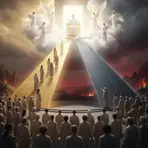 2
9.3
2
9.3
A final day when God decides each person's fate, rewarding good and punishing bad


 1
8.7
1
8.7
A future day when God judges everyone for their actions
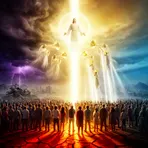
The day when God judges everyone and the world ends
Surface Forms
Etymology
Eschaton comes from the Greek word eschatos, which means 'last'. It names the 'final' event or destiny in Christian belief, the very last thing that will happen to the world and to people. So eschaton means the 'last' moment or end.