
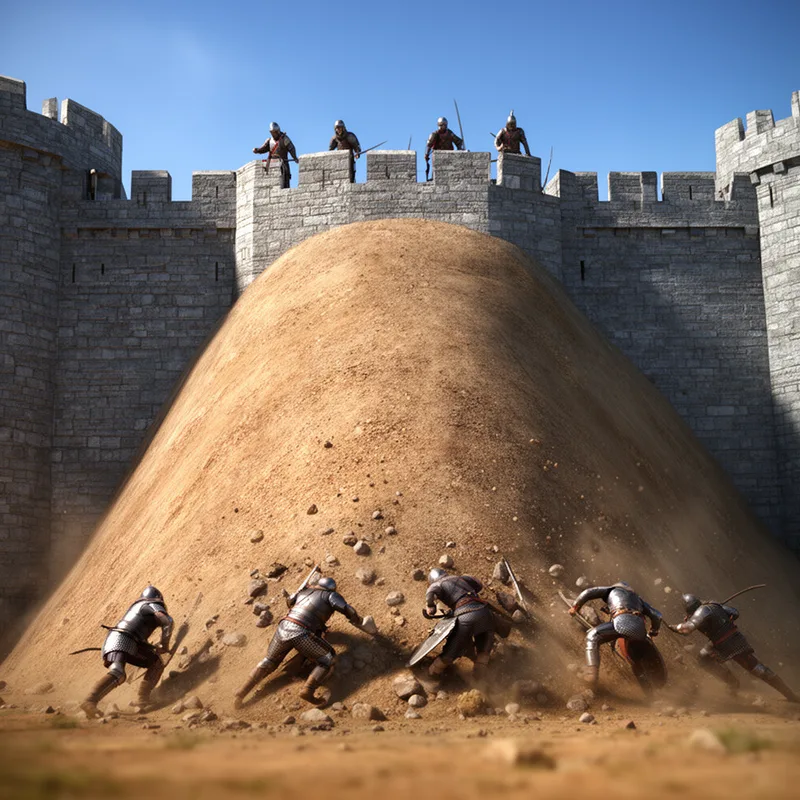
escarpment
- noun
- /ɪˈskɑːrp.mənt/
- Specialized
- Black Mesa Hopi villages typically have consisted of only one- or two-story houses, the Antelope or Black Mesa escarpments providing a defensive advantage against hostile forces approaching from the south.
Examples
-
The fort stood on the edge of an escarpment.
Fiction book (2000) -
The soldiers built an escarpment around the fort to protect against enemy attacks.
-
During the construction, they created a steep escarpment that served as a barrier for intruders.
-
The ancient castle was fortified by a high escarpment that made it difficult for enemies to approach.
Synonyms
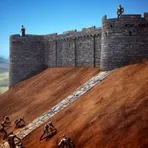
A steep man-made slope in front of a fort's walls that makes attack harder
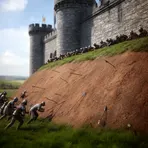
A steep slope in front of a fort made by people that protects it from attack

A steep built slope or wall in front of a fort to stop attackers
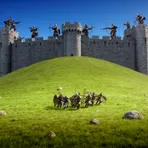
A gentle open slope in front of a fort that exposes attackers to defenders' fire
How Steep


Surface Forms
Morphology
escarpment = escarp + ment
Although it ends in the familiar nominalizer '-ment', the root 'escarp' is a borrowing (not a productive English base), so learners cannot reliably derive the meaning from its parts.
Etymology
Escarpment comes from French escarpe, meaning 'slope' or 'steep bank'. In old forts, builders made a man-made escarpment in front of the walls to stop attackers, so the origin shows why it means a defensive slope.