
erythrulose


 1
9.9
- noun
- /ˌɛrɪˈθruːloʊs/
- Specialized
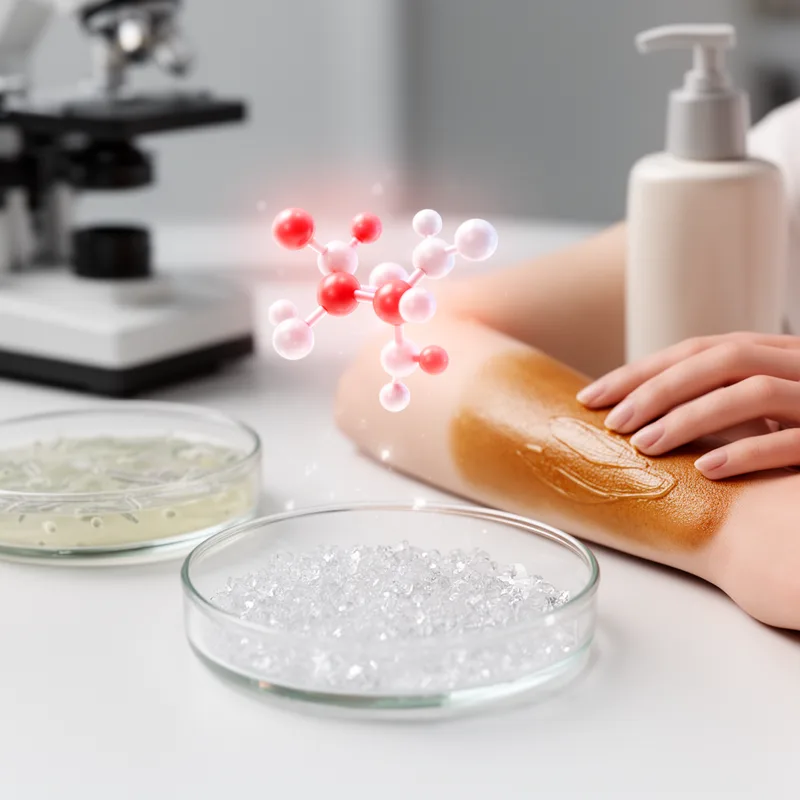
- The self-tanning effect of some lotions is due to the presence of erythrulose as an active ingredient.
Examples
-
Researchers discovered that erythrulose plays a role in certain bacterial metabolic pathways.
-
In the laboratory, erythrulose is used to study carbohydrate metabolism in microorganisms.
-
The erythrulose content in the product helps achieve a natural tan.
-
Scientists study erythrulose for its health benefits.
-
Erythrulose is often included in erythrulose self-tanning lotions because it creates a more natural-looking tan.
-
Researchers found that erythrulose can enhance the development of color in skin when used alongside other ingredients.
-
The cosmetic industry frequently uses erythrulose in formulations to achieve a gradual tanning effect.
Synonyms
 1
9.9
A clear chemical used in self-tanning lotions to make skin look tanned
Surface Forms
Morphology
erythrulose = erythr + ulose
The word is formed from a specialized scientific combining form and the sugar-name suffix '-ulose'; this technical composition is not guessable by an average B1 learner from common English vocabulary.
Etymology
Erythrulose comes from the Greek root erythr- meaning 'red' and the sugar ending -ulose meaning 'a kind of sugar'. The same erythr- appears in erythrocyte, a word for 'red blood cell', so this 'red sugar' name helps you remember that erythrulose is a sugar used in biology and in self-tanning to make skin darker.