

equipage
- noun
- /ˈɛkwɪpɪdʒ/
- Archaic
- The soldiers gathered their equipage, which included tents, weapons, and supplies for the upcoming mission.
Examples
-
Every garrison required "camp equipage" such as tents and flies (tarpaulins), camp kettles, and mess tins, as well as building tools and materials.
Academic text (2011) -
There was but a single dogsled, for equipage only: the king's tent and the cook's provisions and what seemed a landkir of fishnetting.
Fiction book (1993) -
"A falconer must learn to make his own equipage," he said levelly.
Fiction book (1993) -
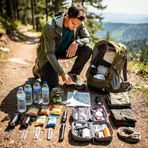
During the expedition, the explorers unpacked their equipage and set up camp amid the mountain trails.
-
Each battalion must ensure its equipage is complete, containing everything from food rations to essential tools.
Synonyms

 4
8.8
4
8.8

Equipment and supplies used by an army
 3
3.4
3
3.4
Standard supplies given to soldiers
 2
6.3
2
6.3
A set of equipment and supplies carried for a trip or mission
How Well-Supplied

Surface Forms
Morphology
Etymology
Equipage comes from French and is related to the English words equip and equipment, meaning 'to provide gear'. It was also used for all the things an army carried—tents, wagons and weapons—so equipage can mean military equipment and supplies.