
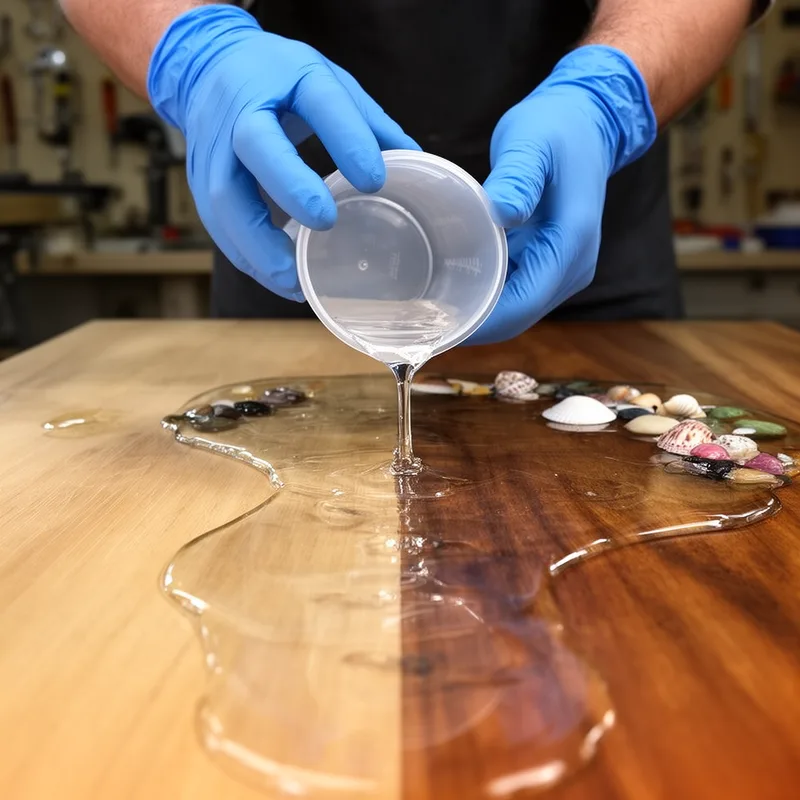
epoxy resin
 1
6.4
1
6.4

- noun
- /ɪˈpɑːk.si ˈrɛz.ɪn/
- Specialized
- The iron reinforcing rods are protected from corrosion by a coating of epoxy resin.
Examples
-
I used two-part epoxy resin to bond the pieces of wood securely together.
-
The mold was cast from epoxy resin and made in two mating halves.
Academic text (1999) -
Nothing like the smell of two-part epoxy resin.
-
The grooves were then filled with an appropriate epoxy resin.
Academic text (2017) -
Top-of-the-line materials such as epoxy resin are used, instead of the cheaper polyester version.
Blog text (20) -
Small bug holes, voids, cracks, and air pockets were filled with an epoxy resin.
Academic text (1997) -
The FRP anchors were then installed, and the slots were filled with appropriate amounts of the epoxy resin.
Academic text (2017) -
First, the carbon fiber threads are woven into long strands and impregnated with epoxy resins.
-
The winding is cast in epoxy resin containing boron nitride to increase its thermal conductivity.
Academic text (1995) -
The predrilled holes and the carved-out slots were then filled with the epoxy resin into which FRP fans were inserted before the metal rods were pulled out of the FRP fans.
Academic text (2017)
Synonyms
 12
6.5
12
6.5
A hard strong material used as glue or a protective coat
How Strong


Surface Forms
Morphology
The compound denotes a type of resin characterized by being epoxy, so its meaning is directly and transparently derived from combining 'epoxy' (a synthetic thermoset) with 'resin' (a sticky polymer). This modifier+noun pattern is compositional and common in technical vocabulary and would be understandable to a B1 learner who knows both constituent words.
Etymology
Epoxy resin combines epoxy (a man-made 'sticky' liquid) and resin (the natural 'sap' or sticky material from trees). When the two are mixed and left to set, they become very 'hard' and shiny, so the name helps us remember it is a strong glue and glossy coating.