

PVA


 1
7.7
1
7.7
- noun
- /ˌpiː viː ˈeɪ/
- Specialized
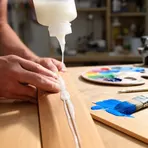
- Gluing with a tub of watered-down PVA glue and a paintbrush
- PVA fibers
Loading YouTube…
Watch on YouTubeThis is museum quality PVA adhesive.
- This is museum quality PVA adhesive.
- So all you need is some of this PVA glue or Elmer's glue in the US and some charcoal.
Examples
-
Ultimaker PVA is a dissolvable filament.
-
So all you need is some of this PVA glue or Elmer's glue in the US and some charcoal.
-
This is museum quality PVA adhesive.
-
All right, using this pH neutral PVA glue that Kate recommended.
-
Start with the two pieces of glass with the ITO and PVA coated sides facing up.
-
And then we'll be ready for priming with PVA and fibreglassing.
-
PVA fibers were then added to the fresh mixture and mixed for 3 more minutes.
Academic text (2016) -
The plug was thoroughly waxed, brushed with PVA, and set aside to dry.
Blog text (13) -
This one uses a frayed canvas patch that's adhered with what I think is an Elmer's or PVA white glue.
-
This is high-quality PVA adhesive used for crafting.
Synonyms
 26
4.4
26
4.4
A thick sticky substance from plants or made by people for glue and plastic
A man-made material used in glue and paint to hold things together

A plastic that people make and use for pipes, flooring, and coatings

A plastic material used to make paints and flexible, water resistant products
How Strong

Surface Forms
Morphology
PVA = P + V + A
This is an initialism (letters represent the technical phrase 'polyvinyl acetate'); the letters themselves do not convey meaning to a typical learner, so the form is not transparently informative.
Etymology
PVA is short for polyvinyl acetate. The parts are poly- 'many', vinyl 'a type of plastic, as in vinyl records', and acetate 'from vinegar', so PVA is a man-made sticky plastic used in glues, paints, and coatings.