

epiphytic plant
- noun
- /ˌɛpɪˈfaɪtɪk plænt/
- Specialized
- The orchid is a classic example of an epiphytic plant, thriving high in the rainforest canopy.
Examples
-
Many ferns are epiphytic plants, living on branches without harming their supporting trees.
-
Because of its unique adaptations, an epiphytic plant can absorb water directly from humid air.
-
An epiphytic plant can thrive without soil.
-
Many epiphytic plants are found in tropical rainforests.
-
Many ferns are epiphytic plants, living on branches without harming their supporting trees.
-
The orchid is a classic example of an epiphytic plant, thriving high in the rainforest canopy.
-
Because of its unique adaptations, an epiphytic plant can absorb water directly from humid air.
Synonyms

 4
9.9
4
9.9

A plant that grows on another plant without harming it and gets water from air and rain

A plant like an orchid that grows on another plant and takes water and nutrients from air and rain

A plant that needs no soil, takes water and food from air and rain, lives on other plants without harm
Antonyms
Surface Forms
Morphology
The adjective 'epiphytic' directly describes a property of a plant (growing on another plant but not parasitic); if a learner knows that adjective meaning, combining it with 'plant' yields the full definition straightforwardly. This is a standard adjective + noun composition and is therefore compositionally transparent to learners who know the constituent words.
Etymology
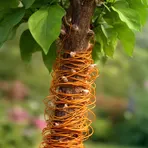
The term epiphytic plant gives a simple picture: a small plant sitting on a tree branch, using the tree just for support, with epiphytic showing 'on' and plant the living plant. It takes water from the air and rain, not from the host, so epiphytic plant means 'a plant that grows on another plant for support without harming it'.