
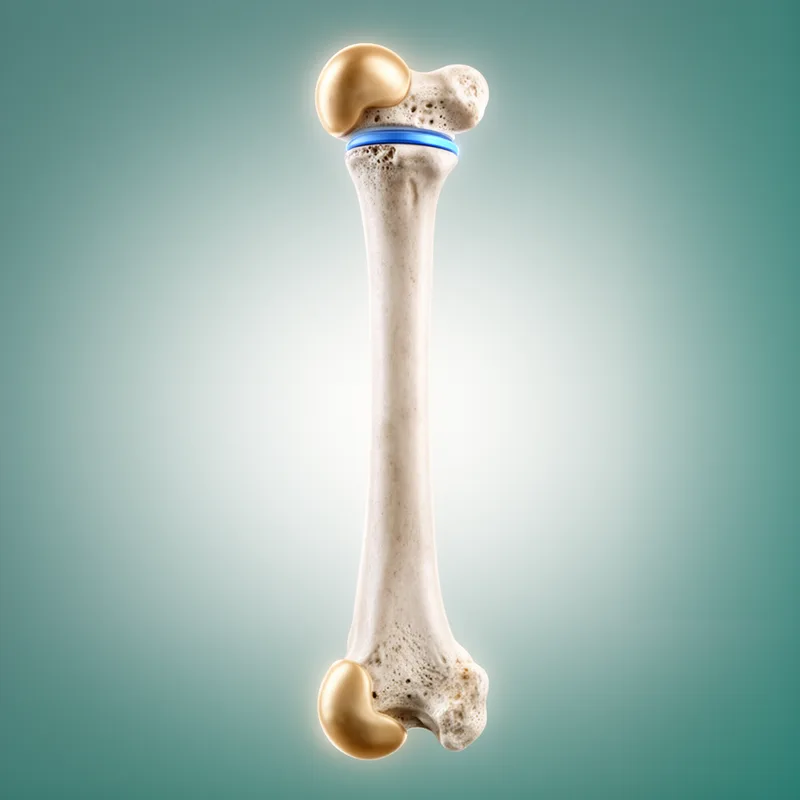
epiphysis
- noun
- /ɪˈpɪfɪsɪs/
- Specialized
- It is seen in hip conditions including slipped upper femoral epiphysis, developmental dysplasia of the hip, arthritis, muscle disease, and neurological conditions.
- femoral epiphysis
- capital femoral epiphysis
Examples
-
Specifically, the Salter-Harris type I fracture of the distal fibular epiphysis, the most common ankle fracture in the preadolescent age group, is commonly diagnosed clinically.
Academic text (2001) -
And if you look on this vertebrae, there's a fracture running through the epiphysis of the vertebrae.
-
A metaphyseal fracture occurs between the epiphysis and the diaphysis of a long bone.
Academic text (2002) -
At birth, each epiphysis is completely cartilaginous, with the exception of the distal femur.
Academic text (2006) -
Conditions such as a slipped epiphysis occur in adolescence and definitely need to be seen by an orthopaedist, or long-term damage can occur to the hip joint.
Blog text (26) -
The epiphysis is the rounded end part of a long bone that fuses with the shaft as the bone matures.
-
At the end of each long bone, you will find an epiphysis that is separated from the diaphysis by cartilage.
-
Fractures can occur in the epiphysis of a long bone if excessive force is applied before it has fused.
Compounds

Surface Forms
Morphology
Etymology
The word epiphysis comes from the Greek parts epi- 'on' and physis 'growth', meaning 'a growth upon' something. So the rounded end part of a long bone is called an epiphysis because it is a growth that forms on the end of the bone as you grow.

