
epigene
- adjective
- /ˌɛpɪˈdʒiːn/
- Specialized
- Researchers study how epigene changes can affect an organism's health over its lifetime.
Examples
-
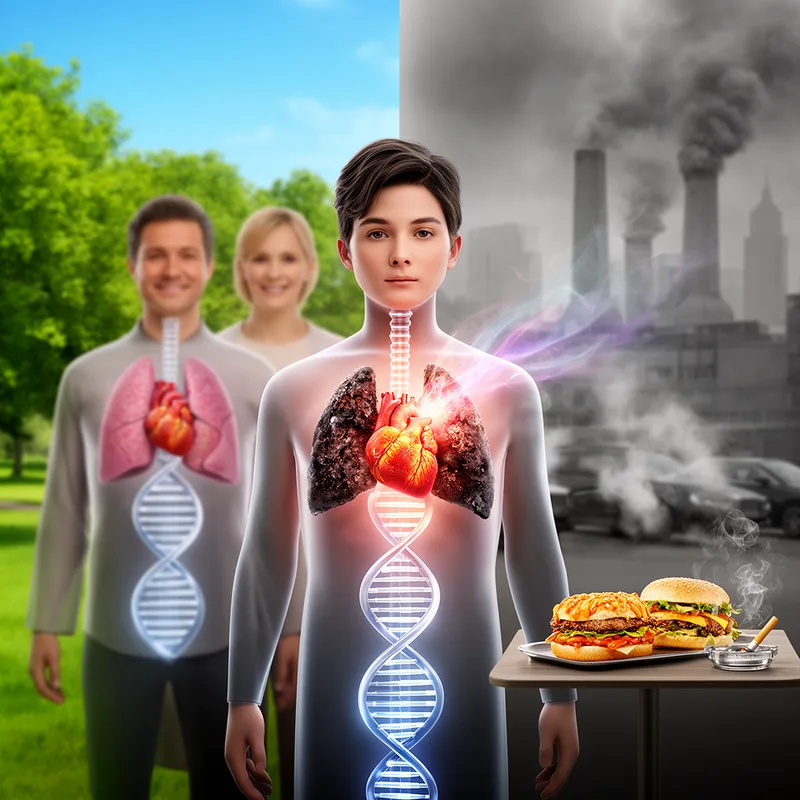
Some diseases are considered epigene because they develop due to environmental factors after birth.
-
The scientist explained that epigene traits are not passed from parents to children through genes.
-
The epigene traits of the plant were influenced by its environment.
-
Many epigene characteristics develop as a reaction to climate changes.
-
Some diseases are considered epigene because they develop due to environmental factors after birth.
-
Researchers study how epigene changes can affect an organism's health over its lifetime.
-
Many epigene characteristics develop as a reaction to climate changes.
Synonyms



 1
9.9
1
9.9
Relating to how an animal or plant grows from young to an adult
Surface Forms
Morphology
Etymology
The word epigene has the parts epi- 'on' or 'after' like in epidermis, and gene 'birth' or 'origin', so think of a trait that appears 'after birth' rather than one you inherit; that is why epigene means a feature that develops during a living thing's life because of the environment or growth.