
enterokinase
- noun
- /ˌɛntəroʊˈkaɪneɪs/
- Specialized
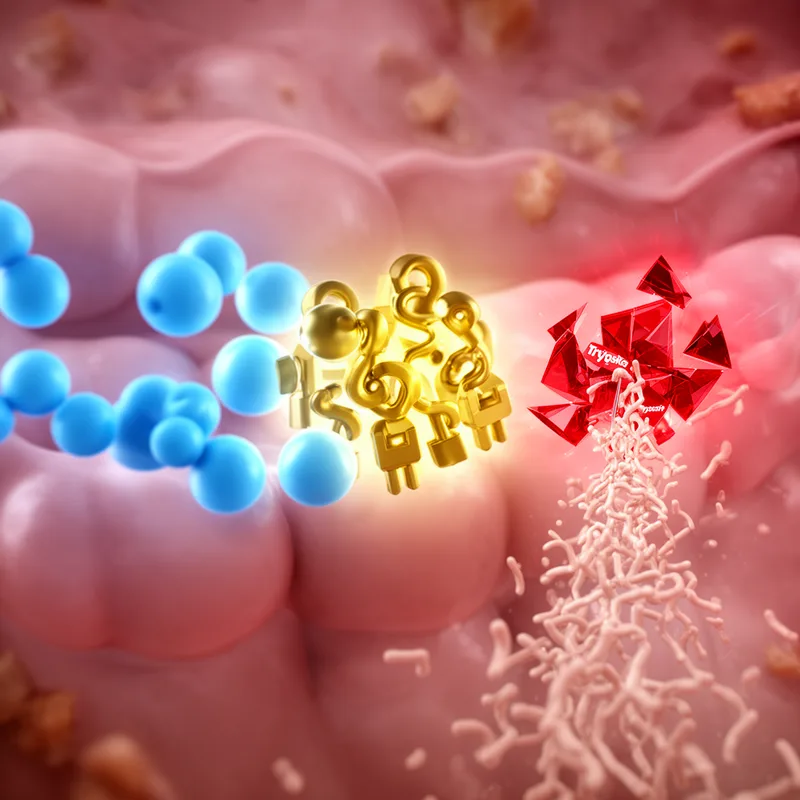
- Scientists studied how enterokinase activates trypsinogen during the digestive process.
Examples
-
Enterokinase plays a crucial role in the digestion of proteins in the small intestine.
-
A deficiency in enterokinase can lead to problems with protein metabolism.
-
The enterokinase enzyme is crucial for digestion.
-
Many studies focus on how enterokinase activates trypsinogen.
-
The role of enterokinase in activating trypsinogen is essential for proper protein digestion.
-
Research has shown that enterokinase is necessary for the conversion of trypsinogen into trypsin in the intestine.
-
Without adequate levels of enterokinase, the body cannot effectively process dietary proteins.
Surface Forms
Morphology
enterokinase = kinase (semi-transparent) = entero + kinase
The prefix 'entero-' clearly signals 'intestinal' and '-kinase' signals an enzyme class, so learners get a partial clue, but '-kinase' is misleading here because enterokinase is actually a protease activating trypsinogen rather than a phosphotransferase.
Etymology
Enterokinase comes from entero- meaning 'intestine' and -kinase from a Greek word meaning 'to move', used for enzymes that 'turn on' other proteins. So Enterokinase is an enzyme in the intestine that 'turns on' the digestive enzyme trypsin.

