

enfant
 3
9.0
3
9.0

- noun
- /ɑ̃fɑ̃/
- Every summer, we take the enfants to the park for fun activities and games.
- enfant terrible
Examples
-
The museum featured a workshop designed for young enfants to explore their creativity.
-
Violet bounced on her toes, like a true enfant terrible.
Fiction book (1990) -
The enfants must be sad.
-
Sidney, I'd like to introduce you to Vincent Lepak, enfant terrible.
-
The exhibition concept was initiated by Wayne Barker, who is regarded as the enfant terrible of the local scene.
Academic text (1996) -
Buddy Mangan, the current enfant terrible, wild card, and cause célèbre of the art business in these parts.
Fiction book (1995) -
But it was Myra Breckinridge that confirmed Vidal's place as the enfant terrible of the respectable American literary scene.
-
Bless you, mes enfants- may the gods pour libations and happiness on your houses.
-
Continuez, mes enfants.
-
Allons, mes enfants!
Synonyms
 ∞
1.0
∞
1.0
A young person, usually a child
 87
7.7
87
7.7
A young child
 1
8.2
1
8.2
A small child or young goat that people talk about in a loving, informal way
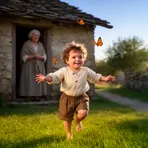
A young child in old or local language
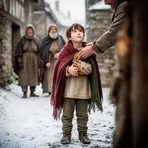
An old word for a child, often a boy
Compounds

Surface Forms
Etymology
Enfant comes from the Latin infans, which meant 'not speaking' because in- means 'not' and fari means 'to speak', so it was used for babies who cannot yet speak. So enfant now means 'child' and shares the same root as English infant.