
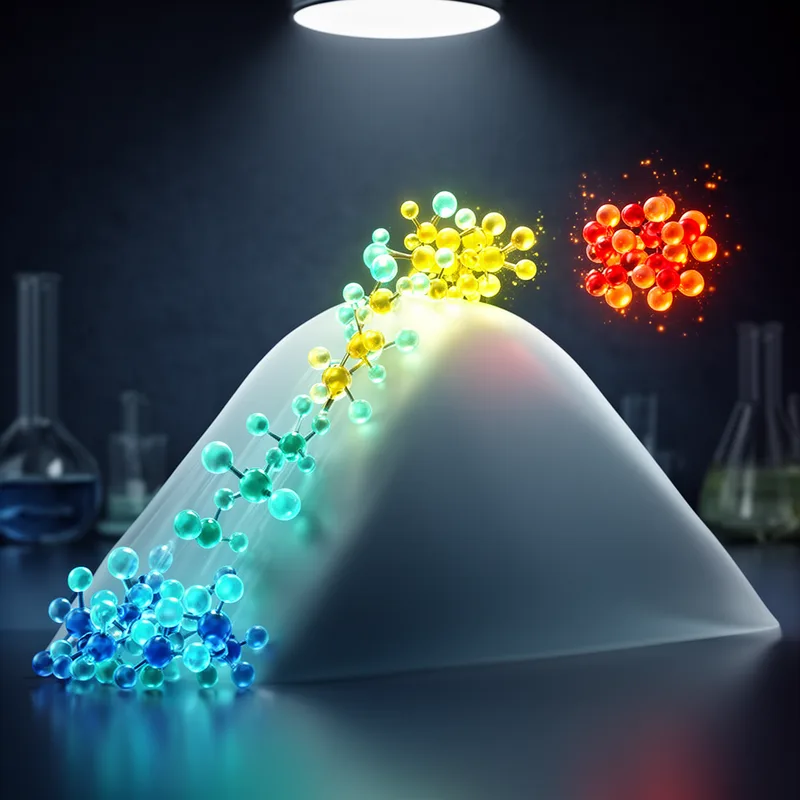
energy of activation
- noun
- Specialized
- Catalysts help lower the energy of activation in many chemical reactions.
Examples
-
The energy of activation for this process is relatively high, making the reaction slow at room temperature.
-
Understanding the energy of activation allows scientists to design more efficient industrial processes.
-
The energy of activation is crucial for understanding reaction rates.
-
Increasing the temperature lowers the energy of activation needed for the reaction.
-
Catalysts help lower the energy of activation in many chemical reactions.
-
The energy of activation for this process is relatively high, making the reaction slow at room temperature.
-
Increasing the temperature lowers the energy of activation needed for the reaction.
Synonyms
The smallest amount of energy particles need to start a chemical reaction
Surface Forms
Morphology
energy + of + activation
The phrase combines 'energy' (usable power) with 'activation' (the initiating of a process), so it literally denotes the amount of energy required to cause activation; the meaning is directly compositional from the constituents. This noun-of-noun construction is cross-linguistically common and, given knowledge of both words, a B1 learner can reasonably infer the intended technical sense even if they lack domain-specific background.
Etymology
The term energy of activation uses the simple picture of a ball on a hill: you must push the ball with enough energy to get it over the top, and that push is the idea of activation so the ball can roll down. So the phrase means the smallest amount of energy needed to 'start' a chemical reaction.

