

ending
 43
2.8
43
2.8

- noun
- /ˈɛndɪŋ/
- Specialized
- To change the meaning of the word, you need to add the correct ending to the base word.
- word endings
- verb endings
- add endings
Examples
-
In English, the ending '-ing' indicates an ongoing action when added to a verb.
-
Show me where the ending goes on it.
-
We got a new ending for you.
-
Take an ending from a recent game.
-
I think that we still got a satisfying ending to our main characters.
-
They'll use that tape as an ending to the story.
-
She decided to change the ending, which is questionable.
-
Dear Keller, endings are hard, but this is better than she dies, I think.
-
With this conclusion, Marianna's novel inscribes a new female destiny, a new ending to the female Bildungsroman.
Academic text (1995) -
"I'm a big believer in the 'cliff-hanger' chapter endings," says Randall Platt, author of Hellie Jondoe.
Academic text (2011)
Synonyms
 ∞
1.0
∞
1.0
The final part of something, like an event or story
 167
2.2
167
2.2
The last part of an event, activity, or piece of writing
 3
6.7
3
6.7
The end part of a word, like the suffix '-ness' that changes its form

Letters added to the end of a word to show grammar, such as tense, number or case
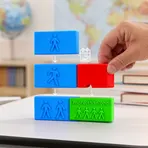
An ending added to a word to show tense or number without changing its main meaning

Something you add to the end of a word to change its meaning or form
Antonyms

Compounds

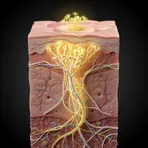
- Specialized
9
4.1
A tiny part of the body that sends feelings like touch or pain to the brain







- Specialized
A tiny part of the skin that sends signals about pain and temperature
- Specialized
Letters added to the end of a word to show grammar, such as tense, number or case


Surface Forms
Morphology
Etymology
The word ending comes from end 'finish' and the little part -ing, but in grammar an ending is the 'final part added' to a word. Think of the plural -s or the -ness in 'happiness' — these are word endings, which is why they change a word's form or meaning.