
enantiomorphic


 1
9.9
- adjective
- /ɪˌnæntiˈɔrmɪk/
- Specialized
- Amorphous fused silica ball; enantiomorphic space group P3(1)21 single crystal alpha-quartz ball; enantiomorphic space group P3(2)21 single crystal alpha-quartz ball.
Examples
-
Water and ice are enantiomorphic, as one structure is a mirror image of the other, but they cannot be perfectly aligned.
-
Amorphous fused silica ball; enantiomorphic space group P3(1)21 single crystal alpha-quartz ball; enantiomorphic space group P3(2)21 single crystal alpha-quartz ball.
Blog text (21) -
The two enantiomorphic forms of the molecule exhibit distinct properties even though they look similar.
-
In chemistry, enantiomorphic crystals are fascinating because they demonstrate how mirror-image structures can differ significantly.
Synonyms
 18
4.3
Having the same look as in a mirror
 1
8.6
Something that is not the same as its mirror image, for example a molecule
 1
9.9
A molecule that is a mirror image of another but cannot be placed on top of it to match
Surface Forms
Morphology
enantiomorphic = enantiomorph (transparent) = enanti + morph + ic
The adjective is a regular derivation from the noun 'enantiomorph' with the adjectival suffix '-ic', so its relation to the base is straightforward.
Etymology
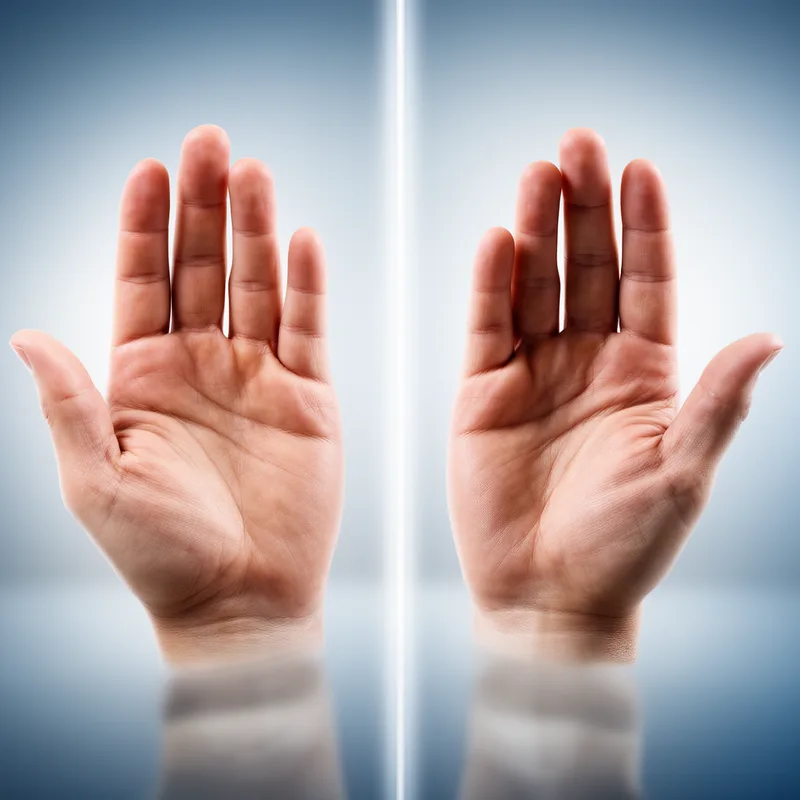
Enantiomorphic comes from the Greek parts enanti- meaning 'opposite' and -morph meaning 'shape'. Think of left and right hands: they are mirror images but cannot be placed exactly on top of each other, so enantiomorphic describes things like crystals or molecules that are mirror opposites but not identical.