
empyema


 1
9.9
1
9.9
- noun
- /ˌɛmpɪˈiːmə/
- Specialized
- Almost every family we knew had had some experience with the previous flu pandemic, for example, but we also had experiences with things like malaria, empyema, pneumonia, and a host of other deadly infectious illnesses.
Examples
-
Post-operatively, she developed empyema and was shortly admitted to the ICU for treatment of mild septic shock.
Academic text (2007) -
A pleural effusion of the empyema.
-
The empyema was treated by re-thoracotomy, antibiotics, and drainage and irrigation.
Academic text (2007) -
He died at home from bronchopneumonia and empyema on Dec 29, 1919, aged 70 years.
Academic text (2003) -
The doctors decided to perform surgery to drain the empyema from his chest cavity.
-
After struggling with severe pneumonia, she developed an empyema that required hospitalization.
-
He was diagnosed with empyema, which caused significant discomfort and breathing difficulties.
Synonyms
 1
9.9
1
9.9
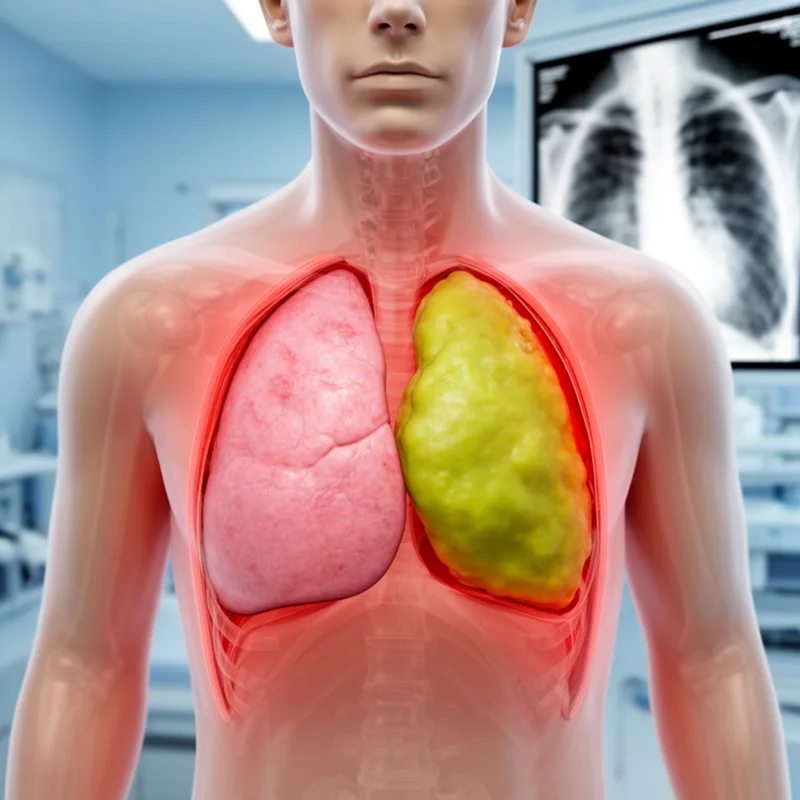
A hollow area in the lung filled with pus or liquid

An illness in which infected fluid collects between a lung and the chest wall

Pus in the space between a lung and the chest wall that causes pain and trouble breathing
How Severe

Surface Forms
Morphology
empyema = em + py + ema
A technical medical borrowing built from Greek combining forms (em- + pyo- + -ema) that are not productive standalone English morphemes and thus not guessable by average learners.
Etymology
Empyema comes from Greek parts em- meaning 'in' and pyon meaning 'pus', so it literally means 'pus inside'. That's why an empyema is a collection of pus inside a part of the body, often the space around the lungs.