

emphysema
 22
7.0
22
7.0

- noun
- /ˌɛmfɪˈsiːmə/
- Specialized
- Moreover, smoking causes all sorts of other diseases, emphysema, kidney diseases, cardiovascular diseases.
- subcutaneous emphysema
- emphysema and bronchitis
- cervical emphysema
Loading YouTube…
Watch on YouTubeAnd the guy upstairs sounds like he's dying of emphysema.
- And the guy upstairs sounds like he's dying of emphysema.
- Moreover, smoking causes all sorts of other diseases, emphysema, kidney diseases, cardiovascular diseases.
- This could be good for people who are suffering from chronic from heart disease that need to get more oxygen to their lungs and might have emphysema.
Examples
-
The second question asked if the respondent had been diagnosed with emphysema or chronic bronchitis.
Academic text (1998) -
There are still no conclusive studies that link smoking to emphysema.
-
Ended up dying of emphysema from all the dust.
-
Ron Spaden had emphysema for several months.
-
My guess is you're in the early stages of emphysema.
-
With this treatment, the emphysema fluctuated but gradually improved over the next few days.
Academic text (2005) -
My grandmother had emphysema.
-
Management of facial subcutaneous emphysema usually involves hospital admission and observation for complications.
Academic text (2006) -
Respiratory illness was defined as past or present problems with asthma, long-term bronchitis, emphysema, or tuberculosis.
Academic text (1996) -
Many smokers eventually develop emphysema, which leads to difficulty breathing.
Synonyms
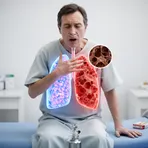
Long-term lung disease that damages the small air sacs and makes breathing hard
Compounds

- Specialized
A severe infection that makes body tissue die quickly, produces gas, and can be fatal
- Specialized
Long-term lung disease that damages the small air sacs and makes breathing hard
How Severe
- Specialized
22
7.0

- UK
- Specialized
1
3.4
3
3.4
2
4.6
Surface Forms
Etymology
Emphysema comes from Greek parts em- 'in' and physa 'to blow'. Think of it as 'blown into' the lungs, which helps you remember that emphysema makes the small air sacs over-inflated and makes breathing hard.