
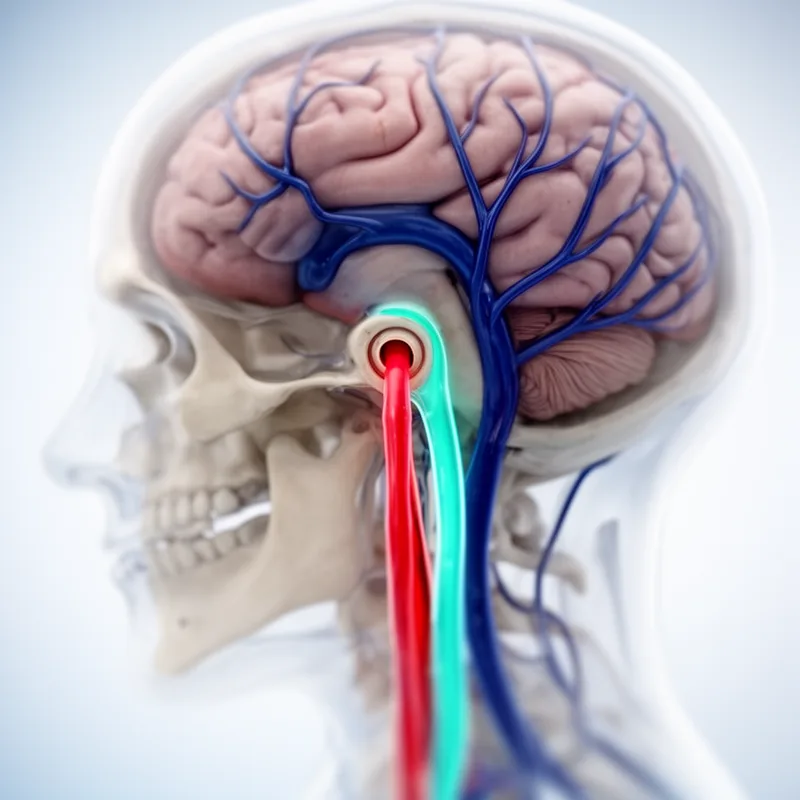
emissary vein
- noun
- /ˈɛmɪˌsɛri veɪn/
- Specialized
- The emissary vein plays a crucial role in cranial circulation.
- openings for emissary veins
Examples
-
The anatomy textbook included a diagram of a typical emissary vein connecting cranial sinuses to external veins.
-
During the anatomy lecture, the professor explained the role of the emissary veins in draining blood from the scalp.
-
During surgery, the surgeon carefully avoided damaging the emissary vein behind the ear.
-
Infections can spread from the scalp to the brain through an emissary vein.
-
Can you explain how the emissary veins function?
-
The emissary veins connect the venous sinuses inside the skull with the veins outside the skull.
-
In her research, she discovered that the emissary veins help regulate blood flow during intense physical activity.
Synonyms
A vein in the head that connects blood inside the skull to veins on the scalp
Surface Forms
Morphology
emissary + vein
The compound is partially transparent: 'vein' is clear and 'emissary' (one that sends/emits) suggests a vessel that transmits or connects, so a learner could infer it names a vein that links or allows passage between places. However, 'emissary' is rare and the specific anatomical function (connecting intracranial sinuses with external veins) is technical and not fully predictable from the parts, so the expression is not fully transparent to a B1 learner.
Etymology
Emissary vein uses the idea of emissary + vein, where emissary means 'messenger' and vein is a blood vessel. So an emissary vein is like a small messenger vessel that 'sends' blood between the inside of the skull and the veins outside it, which is why infections or blood can travel through it.

