
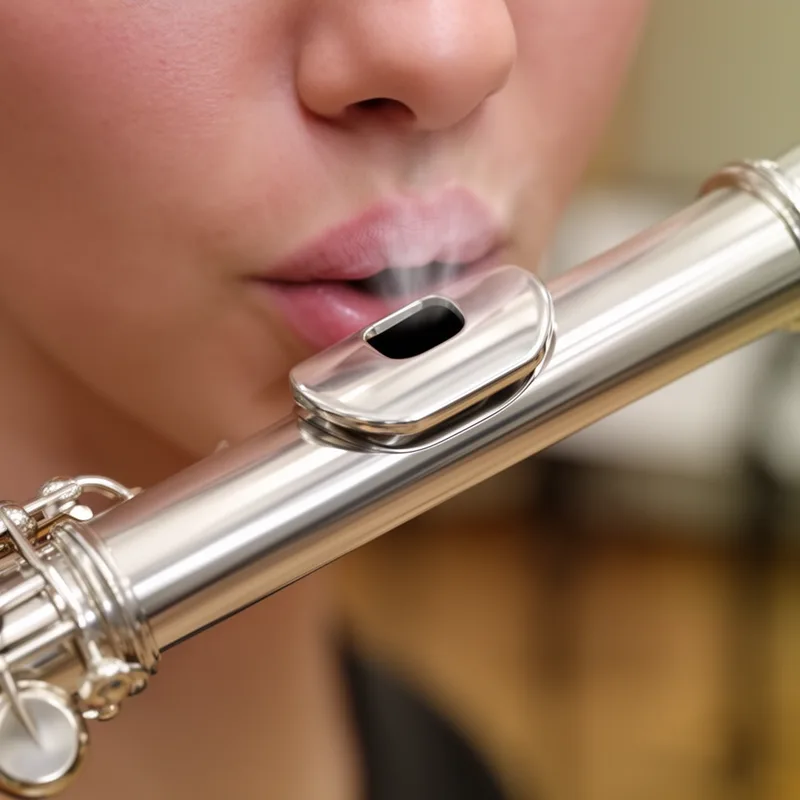
embouchure
- noun
- /ˈæm.buː.ʃər/
- Specialized
- Perhaps the "routine" label is appropriate here because the elements that generally constitute this period (warming of wind instruments, getting the feel for the embouchure, scale work, tuning, articulation, bowing, rhythm, and so on) are fundamental to music performance.
Examples
-
Lindenau, Embouchure Studies and Warm-ups
Academic text (2009) -
Because of these two factors, it was important to evaluate which instrumental embouchure had the greatest potential for success.
Academic text (1996) -
For those students who seem to have difficulty improving tone quality, he schedules individual lessons during lunch, free periods, or before or after school to observe embouchure and breathing, check equipment, and provide individual instruction to help his players improve their sound.
Academic text (1999) -
In contrast with many instruments, the low and high pitches on the ukulele are easy to find and play and require no difficult fingering or embouchure adjustments.
Academic text (1992) -
Lip vibrato, however, is much more difficult to control than jaw vibrato, and it causes embouchure changes that can affect tone quality and intonation.
Academic text (1994) -
The musician adjusted his embouchure to achieve a clearer sound on the trumpet.
-
A proper embouchure is essential for producing a rich tone in wind instruments.
-
During the lesson, the teacher demonstrated the correct embouchure for the clarinet, helping the students to improve their playing.
Synonyms

 3
3.8
3
3.8

The part of a wind instrument that you blow into
Surface Forms
Etymology
Embouchure comes from the French parts em- 'in' and bouche 'mouth', so it literally means 'into the mouth'. That's why an embouchure is the small opening of a wind instrument where you put your mouth to blow.