
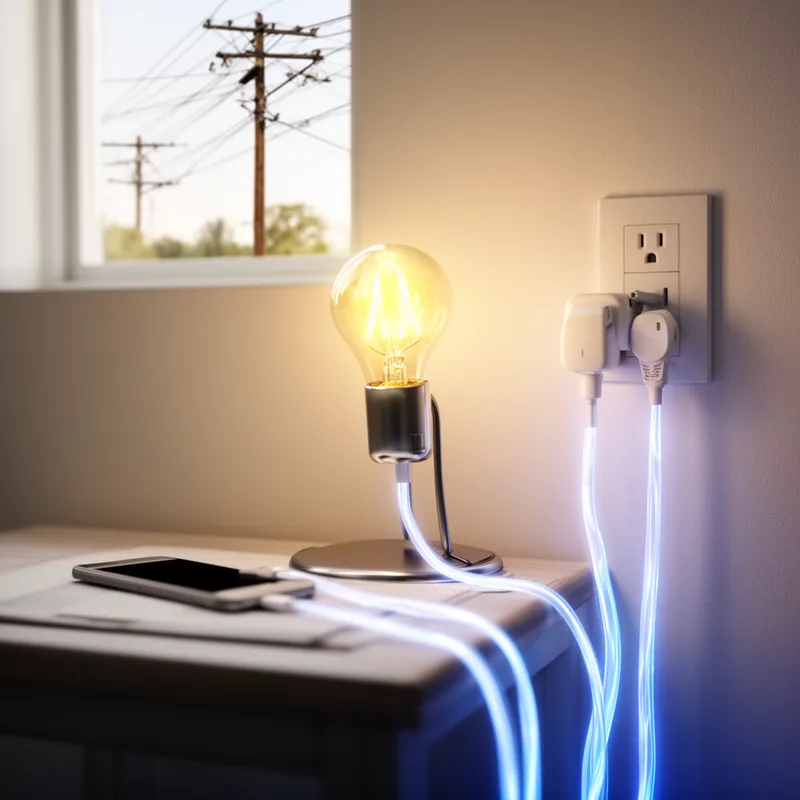
electrical energy
 5
3.7
5
3.7

- noun
- /ɪˈlɛktrɪkəl ˈɛnərdʒi/
- Today's bulbs convert typically about 8 percent of their electrical energy into visible light.
- produce electrical energy
- convert to electrical energy
- supply electrical energy
Loading YouTube…
Watch on YouTubeThey are patterns of energy, the quantum atom, patterns of energy, electrical energy, and magnetic energy.
- They are patterns of energy, the quantum atom, patterns of energy, electrical energy, and magnetic energy.
Examples
-
Hydroelectric dams have generators that convert the mechanical energy of rushing water into electrical energy through electromagnetic induction.
Academic text (2008) -
The energy generated is converted into electrical energy; that machine is known as a wind turbine.
Blog text (25) -
Using current technology, wind turbines have the potential of producing 20% of the electrical energy in the U.S.
Academic text (2012) -
The yellow area plots the electrical energy produced at the solar cell surface for efficiencies between 10% and 20%.
Academic text (2004) -
Photovoltaic cell areas are required to generate electrical energy that could supply a sizable fraction of the US economy.
Academic text (2004) -
Photovoltaics is a high-technology approach to converting sunlight directly into electrical energy.
Academic text (1993) -
The average electrical energy consumption in the state is about 5,000 to 6,000 MW.
Academic text (2006) -
Some modern wind turbines generate as much as 3.6 megawatts of electrical energy (USDOE, 2009).
Academic text (2010) -
Fuel cells generate electrical energy through a chemical reaction of hydrogen and oxygen.
-
Hydroelectric dams have generators that convert the mechanical energy of rushing water into electrical energy through electromagnetic induction.
Synonyms
 ∞
1.5
∞
1.5
Energy that makes machines and lights work
 ∞
1.6
∞
1.6
Power from things like electricity or fuel used to make machines work
 552
1.0
552
1.0
A form of energy that powers machines, lights, and appliances
 1
4.1
1
4.1
Energy from electricity that powers things like lights and machines
 1
3.7
1
3.7
Energy made when charged particles move steadily through a wire to power devices
A flow of electricity, like the current in a wire
How Much

Surface Forms
Morphology
The noun phrase is directly compositional: 'electrical' (pertaining to electricity) modifies 'energy' (usable power), so the meaning 'energy produced by electricity' is derivable from the parts. This adjective+noun pattern is regular in English and cross-linguistically common, so a B1 learner who knows both words will understand it.
Etymology
The term electrical energy comes from the image of tiny charged particles moving through a wire like water in a pipe, carrying power. Here electrical points to the moving charge and energy is the power it carries. So, 'electrical energy' means the energy made by moving electric charge that we use to run devices.