

egress
- noun
- /ˈiːɡrɛs/
- Specialized
- During the eclipse, the egress of the moon allowed viewers to see the stars again.
- ingress and egress
Examples
-
Jean-Charles Gallet, observing the transit from Avignon, also noticed the deformation of Mercury's disk during the small planet's egress.
Academic text (2006) -
The egress of the planet was captured beautifully in the photographs taken during the event.
-
A noted clockmaker, Rittenhouse built a piece to measure the time of Venus's first and second contact (or ingress and egress) on the solar disc.
Academic text (2004) -
Astronomers noted the precise timing of egress as Jupiter reappeared from behind the shadow of Saturn.
Synonyms
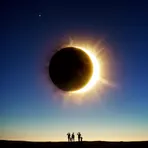
The act of coming into view after being hidden, for example when the sun appears after an eclipse

An act of coming out or appearing, like gas, people and new evidence
Antonyms
- Specialized
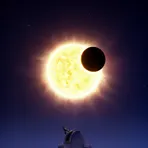
When a star or planet moves behind another object at the start of an eclipse
Surface Forms
Etymology
The word egress comes from Latin parts ex- 'out' and gress 'step', so it has the image of 'stepping out' from hiding. So in astronomy, an egress is when a planet or moon 'comes out' again after being hidden.

