
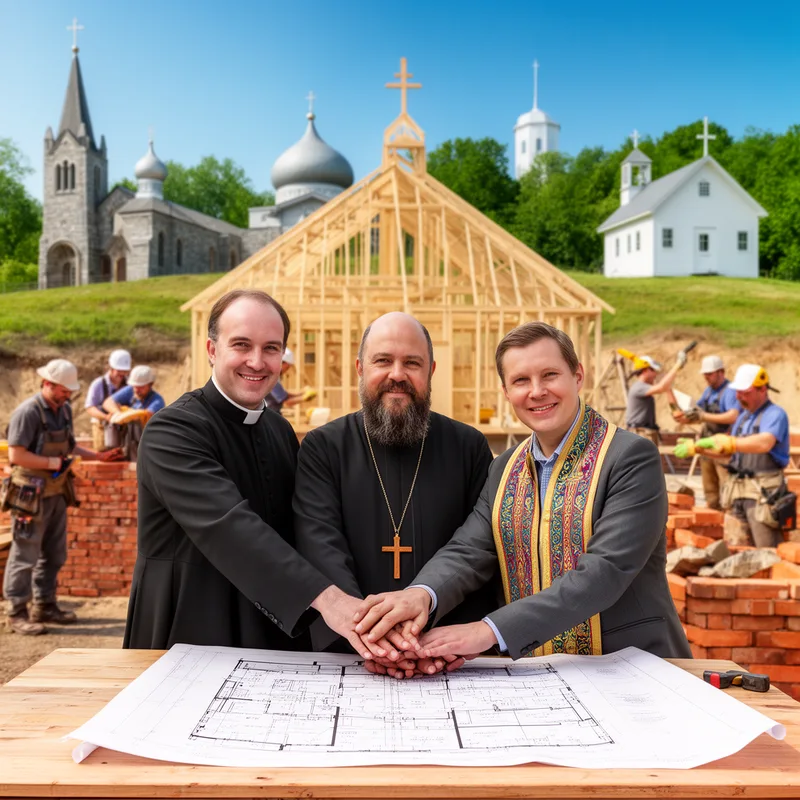
ecumenicalism
- noun
- /ˌɛkjuˈmɛnɪkəlɪzəm/
- Specialized
- Could it be that the revival provided not a status change—not a change in being, as the ritual overtly structured the event—but a step toward becoming a person, with greater cultural capital, higher social prestige, and greater command of ecumenicalism and, indeed, of global capitalism?
Examples
-
Her advocacy for ecumenicalism promotes dialogue between various denominations to strengthen their shared beliefs.
-
These Croatian priests disagreed with the CFU's policy of "ecumenicalism" and refusal to make Church membership a requirement for CFU membership.
Academic text (1996) -
The conference focused on ecumenicalism, aiming to unite different Christian groups in understanding and cooperation.
-
During the meeting, they discussed the importance of ecumenicalism in fostering unity among Christians from diverse backgrounds.
Synonyms

 3
8.9
3
8.9

Effort to make different Christian churches and sometimes other religions work together

An effort to make different Christian churches work together and understand each other
Antonyms

How Ecumenical
- Specialized
 214
2.7
443
2.5
160
3.7
71
4.6
214
2.7
443
2.5
160
3.7
71
4.6
Surface Forms
Morphology
ecumenicalism = ecumenical (transparent) = ecumenical + ism
Formed by the noun-forming suffix '-ism' added to the adjective 'ecumenical', yielding the belief or movement related to ecumenical concerns.
Etymology
The word ecumenicalism comes from the Greek oikoumenē, meaning 'the inhabited world', and it is the same root as eco- in 'ecology'. The ending -ism means 'a belief or movement', so ecumenicalism is the belief in bringing different Christian groups together into one, worldwide church.