
echinoid
- adjective
- /ˈɛkɪnɔɪd/
- Specialized
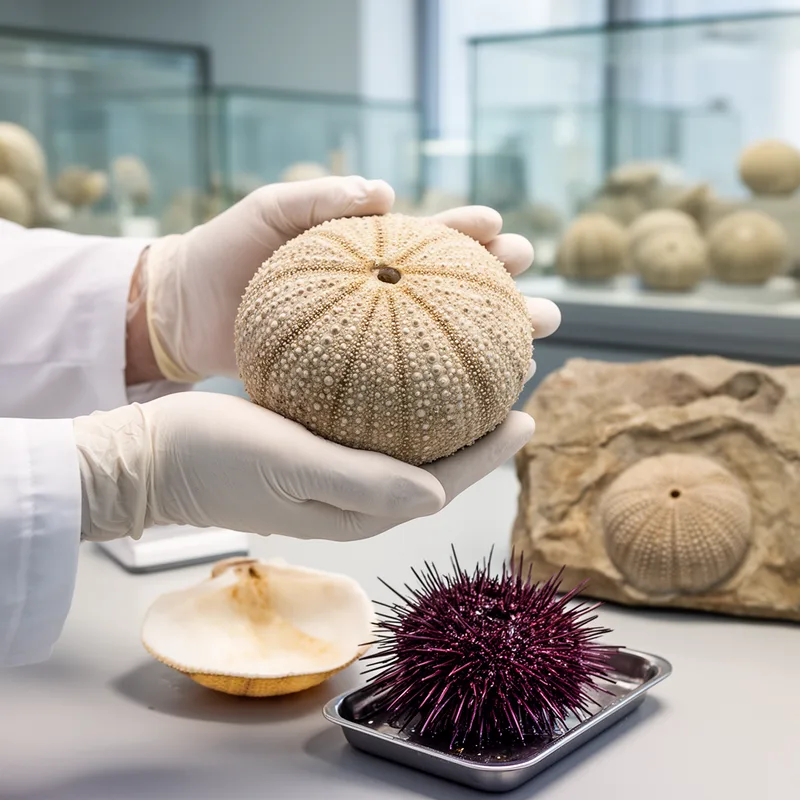
- Many echinoid species have spiny shells that protect them from predators.
Examples
-
Many researchers study the echinoid anatomy to understand their evolutionary history.
-
The echinoid fossils found in this area are well preserved.
-
The scientist examined the echinoid features of the fossilized remains found on the beach.
-
The museum displayed several echinoid specimens collected from ancient seabeds.
-
The scientist examined the echinoid features of the fossilized remains found on the beach.
-
Many echinoid species have spiny shells that protect them from predators.
-
Researchers study echinoid fossils to gain insights into ancient marine ecosystems.
Surface Forms
Morphology
echinoid = echinoderm (semi-transparent) = echino + oid
The suffix '-oid' signals 'like' or 'relating to', but 'echino-' is a specialized combining form referring to sea urchins, so the relation is only partly clear to average learners.
Etymology
Echinoid comes from the Greek word echinos meaning 'hedgehog', because sea urchins are spiny like a little hedgehog, and the ending -oid means 'like', as in humanoid or asteroid. So calling something echinoid is a short way to say it is 'like' or related to sea urchins, their shape, or their fossils.

