

ecclesiasticism
- noun
- /ɪˌklizɪˈæstɪsɪzəm/
- Formal
- Many argue that modern ecclesiasticism can overshadow the true message of compassion and community.
Examples
-
"... Ecclesiasticism without Christianity, the discipline of a monastic rule, not for God's sake or in order to achieve personal salvation but for the sake of the State and for the greater glory and power of the demagogue turned leader - this was the goal for which the systematic moving of the masses was to lead,"
Blog text (24) -
The teacher criticized the student's excessive focus on ecclesiasticism rather than personal faith.
-
Specifically, from the political accusation, accusation for free thought and open speech, it switches to accusation for lack of ecclesiasticism and Franciscan obedience, for breaking the Franciscan and ecclesiastical unity.
Academic text (2013) -
In discussions about religious practices, it's important to avoid ecclesiasticism that prioritizes rituals over genuine belief.
Synonyms


 1
9.9
1
9.9
A focus on church rules and ceremonies instead of true faith
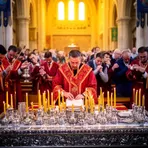
Giving too much importance to ceremonies and formal actions in worship

Giving too much importance to religious rituals like baptism and communion instead of personal faith

Giving great importance to formal public events and rituals

Support for giving religious leaders more power in politics
Antonyms

How Church-Focused
- Formal
 1
9.9
1
9.9
- Formal
10
8.1
1
7.2
Surface Forms
Morphology
ecclesiasticism = ecclesiastic (transparent) = ecclesiastic + ism
Formed by the regular derivation 'ecclesiastic' + '-ism' denoting a doctrine, tendency, or practice related to the church, so the relation is predictable from the components.
Etymology
Ecclesiasticism comes from the Greek root ekklesia, meaning 'assembly' or 'church', plus the ending -ism, meaning 'a belief or practice'. So ecclesiasticism means focusing too much on church rules, ceremonies, or leaders instead of on personal faith.