

ecclesiastic


 1
9.9
1
9.9
- adjective
- /ɪˌklizɪˈæstɪk/
- Formal
- She has a deep interest in ecclesiastic history, particularly the role of the clergy in medieval society.
- ecclesiastic and civil
Examples
-
The ecclesiastic leaders gathered to discuss important matters regarding the church's future.
-
The ecclesiastic community organized a charity event to support those in need.
-
At the same time, Roman ecclesiastic jurisdiction was being threatened in the Balkans.
Academic text (2009) -
I have opposed civil to civic, but for the founders of liberalism, an even more fundamental distinction was that between civil and ecclesiastic or divine.
Academic text (1991) -
Penances imposed should be "arbitrary," i.e., according to the judgment of the ecclesiastic, not according to abstract lists of penalties.
Academic text (1993) -
For centuries, the ecclesiastic and secular nobility were patrons of the arts and monasteries, and many monasteries also functioned as art workshops.
Academic text (2009) -
Men as diverse as the ecclesiastic John Bale, the jurist Edward Coke, and King James I all used the Brut myth to justify their ideas about how English institutions should be arranged.
Academic text (1999) -
So it struck the nineteenth-century ecclesiastic as wrong to accord women a say in the government of the nation's affairs, or the eighteenth-century parson to accept that landless peasants had some dignity worth preserving by suffrage.
Academic text (2010)
Synonyms
 12
9.9
12
9.9
Connected with the Christian Church and its leaders
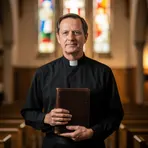 11
6.1
11
6.1
Relating to church leaders and their duties
 2
9.3
2
9.3
Relating to a church, its leaders, or its work

About priests and their duties in religious ceremonies
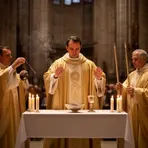
About priests and their work
How Church-Related

Surface Forms
Etymology
Ecclesiastic comes from the Greek ekklesia, meaning 'assembly' or 'church', and was used for things connected with that church group. So when ecclesiastic is an adjective it means 'relating to the church' or its leaders.