
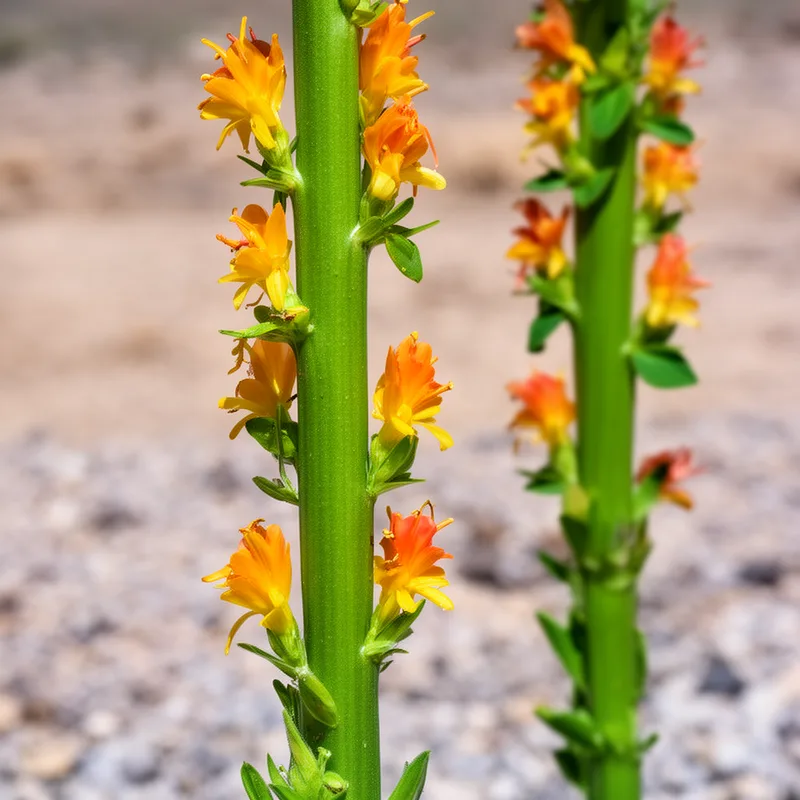
ebracteate
- adjective
- /ˌiːbrækˈtiːt/
- Specialized
- Many desert plants are ebracteate, producing their flowers directly from the stem.
Examples
-
The flowers of the plant are ebracteate, meaning they grow without any protective bracts.
-
The ebracteate nature of the species helps botanists distinguish it from its relatives.
-
Under the microscope, the flower appeared completely ebracteate and symmetrical.
-
The ebracteate flowers of this species are quite unique.
-
Is this plant ebracteate or does it have bracts?
-
Botanists noticed that the ebracteate characteristics of the specimen set it apart from similar species.
-
In botany, plants that are ebracteate have flowers that emerge directly from the stem, lacking any extra leaves.
Antonyms
How Bracted

Surface Forms
Morphology
Etymology
Ebracteate comes from the prefix e- meaning 'without' and bract meaning 'a small leaf near a flower'. So, it literally means 'without bracts' and describes a plant or flower that grows without those small leaf parts.

