
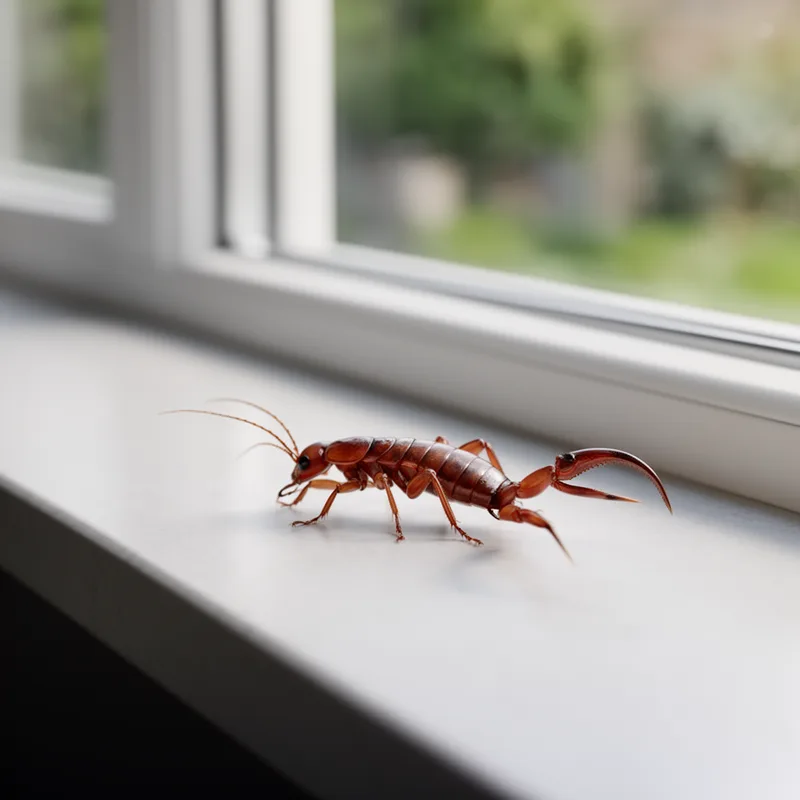
earwig
 6
6.6
6
6.6

- noun
- /ˈɪrˌwɪg/
- I was now prowling in the long grass beneath the table, hoping not to be bitten by earwigs.
Loading YouTube…
Watch on YouTubeNow, they're nowhere near related to slugs, but slugs and earwigs both like similar conditions.
- Now, they're nowhere near related to slugs, but slugs and earwigs both like similar conditions.
- And insects like slugs and pill bugs and earwigs, they thrive on that damp, cool, dark conditions that mulch can provide.
Examples
-
Earwigs and bedbugs meandered along the edge of the wall.
Fiction book (2000) -
We have tons of earwigs, tons of squash bugs and mosquitoes really, really bad.
-
In fact, I don't know if you can see that, but that's an earwig right there that just fell out.
-
An earwig scampered, a hummingbird squeaked, but not an ant stirred.
Academic text (2003) -
As we watched, cockroaches, earwigs, isopods, and other small arthropods ran to escape the advancing waves of ants.
Academic text (2003) -
It's the same fear she has at the beach: not of the waves or the currents or even drowning; it's the fear of what she can't see under the surface: earthworms and earwigs, pull tabs and broken glass.
Fiction book (1992) -
She looked over her shoulder and saw the moths and earwigs congregated on the lantern, casting their forms upon the lawn in grotesquely enlarged stature.
Fiction book (1998) -
You may find earwigs resting within the tubes in the early morning.
-
To trap earwigs, make thin tubes out of newspaper and place them around the plant.
-
Despite their ick factor, earwigs also feed on mites, insect eggs, and aphids.
Synonyms

Compounds
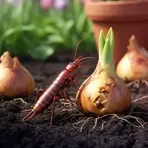
An insect with pincers that often lives in gardens and may damage flower bulbs
Surface Forms
Etymology
Earwig comes from an old idea that this insect would crawl into the ear, and the wig part is from a word meaning 'to move', like wiggle. So the name gives the picture of a small moving insect near the ear, which is why we call this bug an earwig.