

dry plate process
- noun
- Archaic
- Photographers in the late 19th century often relied on the dry plate process to capture images quickly and efficiently.
Examples
-
The advent of the dry plate process revolutionized photography by eliminating the need to coat plates immediately before exposure.
-
He studied the dry plate process as part of his research into early photographic techniques.
-
The dry plate process changed photography.
-
Did you learn about the dry plate process?
-
The invention of the dry plate process revolutionized early photography by allowing images to be captured more easily and quickly.
-
Many photographers of the late 19th century relied on the dry plate process for its convenience and efficiency in producing prints.
-
The dry plate process was a significant advancement in photographic technology, paving the way for modern film development.
Synonyms
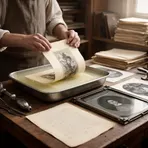
A way of making photo prints with a gelatin plate or a print made the same way

A way to print pictures using a glass plate covered with gelatin to transfer the image
Surface Forms
Morphology
The phrase denotes a 'process' involving a 'plate' that is 'dry' — i.e., a photographic method using dry plates — so the overall meaning is directly derivable from the constituent words. Although it is a technical/historical term, its composition is literal and predictable (and many languages use analogous compound labels), making it understandable to a learner who knows the parts.
Etymology
Dry plate process comes from photography in the 1800s, when a glass plate was coated with a light-sensitive 'gelatin' and kept dry until it was used. Because photographers could prepare these plates in advance and use them later, the method made taking pictures much faster, and that's why the name means this particular way of making photographs today.

